
Palmitoyl Oligopeptide-78 is a synthetic biomimetic lipo-peptide that stimulates keratin production by keratinocytes, enhancing epidermis thickness, lessening transdermal moisture loss, and enhancing the barrier function of the skin.
Peptides
There are numerous examples in physiology of peptide regulatory elements that play integral roles in basic homeostatic mechanisms such as injury-repair responses and other stimulus-response actions. Among these are well-known neuropeptides (e.g., bradykinins, endorphins); metabolism and fat storage regulators (e.g., neuropeptide Y, leptin, insulin); tanning and skin pigmentation-related peptides (e.g., α-MSH, ACTH, Agouti), and peptides involved in wound healing (e.g., FGF).
This large group of innovative cosmeceutical ingredients triumphed in the world of skincare products during the last two decades. Peptides are chains of amino acids that are attached in a specific order. Amino acids are naturally occurring in the body and are vital to everyday living processes. Peptides can be made up of 2 or more amino acids that can stimulate different responses within the body. As a result, peptides serve as tiny messengers that can be sent to kick the skin into gear and make it look better.
Peptides are leading a beauty revolution due to their excellent multi-functional properties; formularies are scrambling to access the latest advances in cosmetic peptide technology. In addition, their "Botox-like" performance, activation of collagen and elastin production, and skin-lightening effect make them very efficient against coarse wrinkles and hyperpigmentation of the skin.
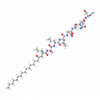
Palmitoyl sh-Octapeptide-24 Amide is a lipo-peptide derived from palmitic acid and a synthetic analog of a human peptide that inhibits the expression of genes responsible for tyrosinase enzyme production.
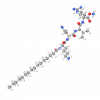
Palmitoyl sh-Tetrapeptide-2 Amide is a lipo-peptide that inhibits Interleukin-1R, an inflammatory cytokine receptor, soothing skin irritation and acting as an anti-inflammatory agent.
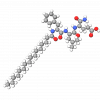
Palmitoyl sh-Tripeptide-1 Amide is a low molecular weight synthetic recombinant lipo-peptide derived from FGF-1 (Fibroblast Growth Factor-1; sequence part 99-101) that is involved in various cellular processes, including angiogenesis, keratinocyte organizat
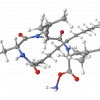
Palmitoyl sh-Tripeptide-2 Amide is a low molecular weight lipo-peptide derived from Tumor Necrosis Factor Receptor (TNFR; Tumor necrosis factor receptor superfamily member 1B) that inhibits TNF-α (Tumor Necrosis Factor-α; Tumor Necrosis Factor).
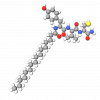
Palmitoyl sh-Tripeptide-3 Amide is a low molecular weight lipo-peptide derived from Pro-Epidermal Growth Factor (EGF; sequence position 894-896) that stimulates cell growth, proliferation, and differentiation by binding to its rec
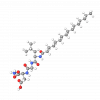
Palmitoyl sh-Tripeptide-4 Amide is a low molecular weight lipo-peptide (316.3 Da) derived from CD99, a cell membrane antigen-like multifunctional protein that is expressed in human cells.
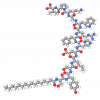
Palmitoyl sh-Tripeptide-5 Norisoleucyl sh-Nonapeptide-1 is a lipo-peptide that acts as an antagonist of
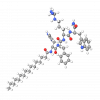
Palmitoyl Tetrapeptide-20 Amide is a biomimetic lipo-peptide with sequence Pal-His-Phe-Arg-Trp-NH2 that mimics α-MSH (alpha Melanocyte Stimulating Hormone) by binding the MC1-R (melanocortin 1 receptor) and stimulating melanin productio
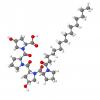
Palmitoyl Tetrapeptide-50 is a synthetic, biologically active lipopeptide with the sequence Pal-Pro-Hyp-Pro-Hyp.
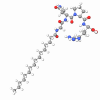
Palmitoyl Tetrapeptide-7 (also known as Rigin™) is a lipopeptide from Sederma designed to mimic DHEA activity and restore cytokine balance to mature skin.
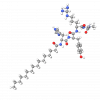
Palmitoyl Tetrapeptide-72 Amide is a synthetic lipo-peptide with the sequence Pal-His-Tyr-Arg-Ala-NH2 that boosts expression and production of Mohawk, a homeodomain protein abundantly expressed in the young skin and actively involved in the regen
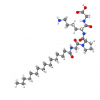
Palmitoyl Tetrapeptide-94 is a synthetic matrikine lipopeptide that triggers skin repair processes. It has been developed at the University of Manchester using machine learning to identify peptide sequences from ECM proteins with anti-aging properties.
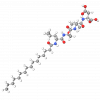
Palmitoyl Tetrapeptide-95 is a synthetic matrikine lipopeptide that modulates skin repair processes.
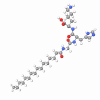
Palmitoyl Tripeptide-1 stimulates fibroblasts and enhances the production of collagen and GAGs, smoothing fine lines and deep wrinkles and improving the water-binding ability and elasticity of the skin.
Palmitoyl tripeptide-28 is a peptide ingredient based on TGF-β (Transforming growth factor beta) that mimics cytokine action by binding with specific receptors (TGF beta receptor 2) on fibroblast membrane, stimulating the production of extracellular matrix
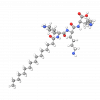
Palmitoyl Tripeptide-36 (Palmitoyl Trilysine) is a synthetic amphiphilic lipo-peptide that exhibits antimicrobial activity. It inhibits the growth of Staphylococcus aureus and other bacteria and fungi.
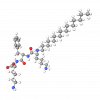
Palmitoyl Tripeptide-37 is a synthetic lipo-peptide with sequence Pal-KFK (Palmitoyl-Lys-Phe-Lys) that leaves thrombospondin-like action. It is an analog of Lipospondin.
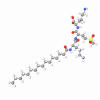
Palmitoyl Tripeptide-38 also known as Pal-KMO2K is a matrikine-mimetic peptide, that stimulates hyaluronic acid and collagen production.
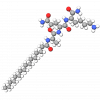
Palmitoyl Tripeptide-53 Amide (known under the trade name Winhibin™) is a low molecular-weight tripeptide derived from Sfrp5 (Secreted frizzled protein5) and known as a modulator adipokine of WNT-signaling.
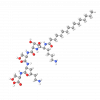
Palmitoyl-KTSKS (Palmitoyl Pentapeptide-4) is a synthetic lipo-peptide developed by Sederma with selective antimicrobial (not bacteriocide) activity and known under the trade name BB-Biont™.
Pentapeptide-13 is a synthetic peptide that mimics the human Agouti-signaling protein (ASP or ASIP) action. This peptide is also known under the trade name CG-ASP.
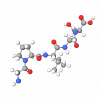
Pentapeptide-20 is a synthetic peptide with the sequence Gly-Pro-Ile-Gly-Ser (GPIGS) used in specialized applications as a hair growth-stimulator.
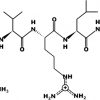
Pentapeptide-25 is a synthetic peptide that retreats the sequence (Lys Val Arg Leu GIn) of a member of the UCP family of proteins found in mitochondria.
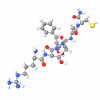
Pentapeptide-29 Cysteinamide is a synthetic hexapeptide derived from keratin (a part of protein amino acid sequence Arg-Ser-Phe-Ser-Ala-Cys) with a terminal Cysteine.
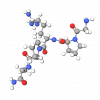
Pentapeptide-3 is a synthetic peptide with the sequence Gly-Pro-Arg-Pro-Ala-NH2 known under the trade name Vialox peptide.
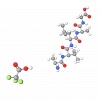
Coenzyme Q10 is present in dermal cells, where it stimulates ATP (cellular energy molecules) production and protects from oxidative damage (free radicals).
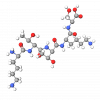
Pentapeptide-4 (formerly Pentapeptide-3) is a synthetic peptide with the sequence KTTKS (Lys-Thr-Thr-Lys-Ser-OH), a fragment of pro-collagen I. It is known under the trade name Micro-Collagen™ (Sederma S.A.; 99820559).
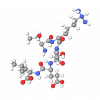
Pentapeptide-48 is a synthetic peptide with the sequence Thr-Arg-Ser-Glu-Leu that repeats the active part of the Royalactin protein.
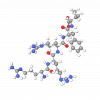
Pentapeptide-59 is a synthetic peptide derived from a part of a sequence (Arg-Arg-Arg-Phe-Val) of sea anemone (Heteractis Crispa) venom protein called APHC1.