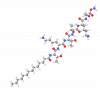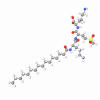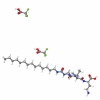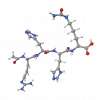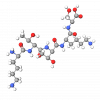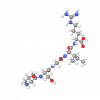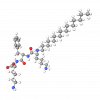
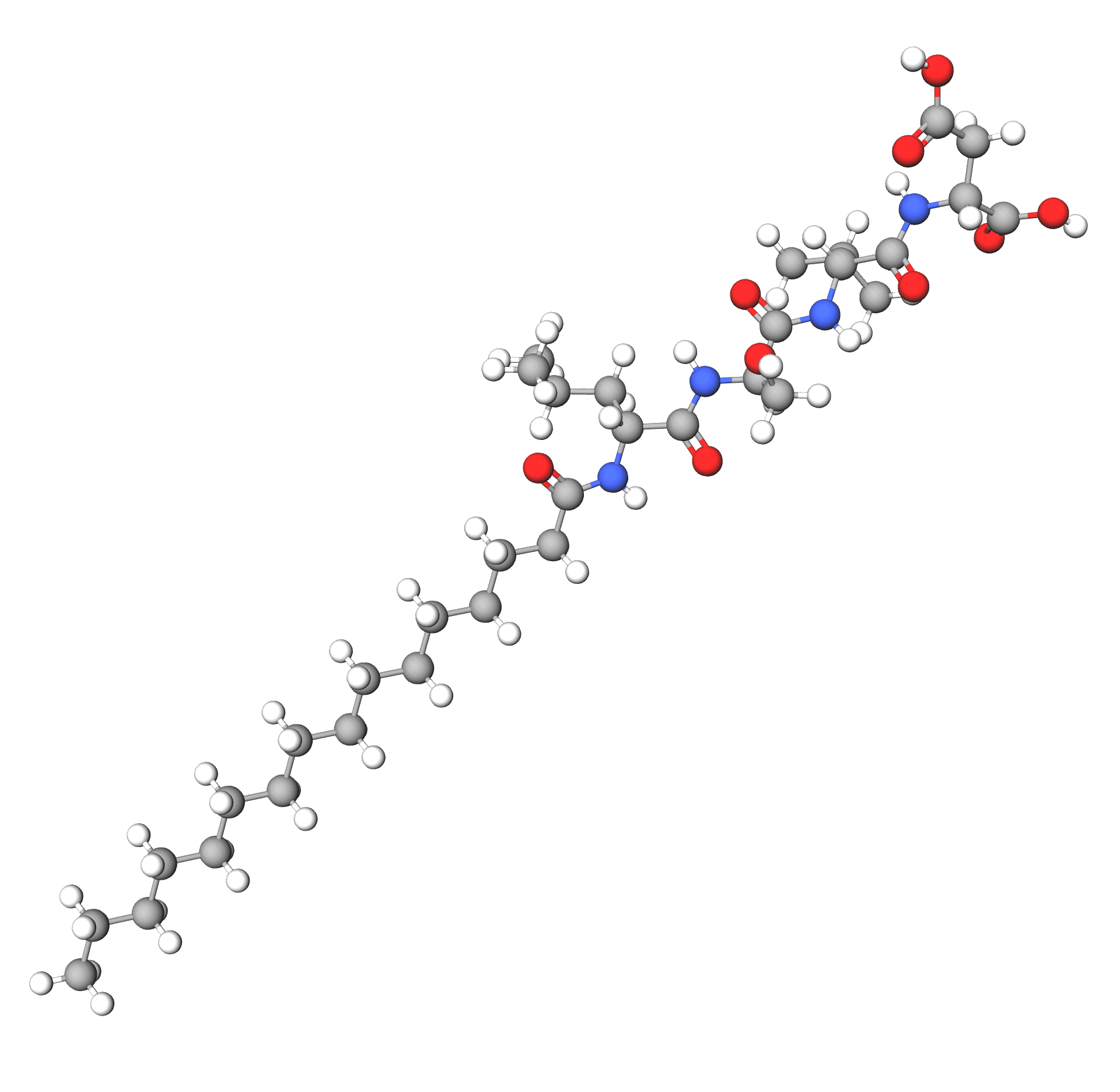
Palmitoyl Tetrapeptide-95 is a synthetic matrikine lipopeptide that modulates skin repair processes. It was developed at the University of Manchester using machine learning to identify bioactive peptide sequences in ECM proteins, which are involved in the skin's natural regeneration mechanisms.
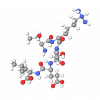
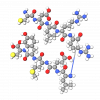
Palmitoyl Tetrapeptide-95 has the sequence Pal-Leu-Ser-Val-Asp (pal-LSVD). This sequence is a matrikine motif within Fibulin-1 (432-435), a key glycoprotein found in the skin's extracellular matrix (ECM). Like other matrikines, the LSVD fragment also acts as a biological messenger, signaling cells to remodel the skin's structural framework.
Palmitoyl Tetrapeptide-95 simulates damaged (fragmented) structural proteins, triggering the skin's natural repair process. It notably enhances Fibulin-1 production and the deposition of fibrillin-rich microfibrils and collagen, both of which are essential for skin elasticity and structural integrity. Research confirms that it independently enhances the deposition of fibrillin-rich microfibrils, which are necessary for maintaining skin elasticity and resilience.
When combined with Palmitoyl Tetrapeptide-94 in the complex known as Pepticology™, it creates a synergistic effect that potentiates anti-aging efficacy. This peptide-based complex has been shown to repair photo-damage effectively, yielding clinical results comparable to those of all-trans-retinoic acid (tretinoin) but without the associated side effects. Unlike retinoic acid, which is often related to adverse effects such as sensitivity, redness, and irritation, it is reported to be well-tolerated and suitable for sensitive skin.