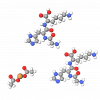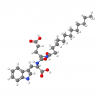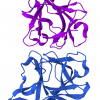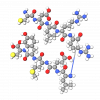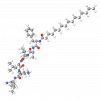

sh-Polypeptide-1 is a single-chain synthetic peptide (molecular weight 17.25 kDa) analog of bFGF (basic Fibroblast Growth Factor or FGF2), that regulates skin renewal promotion. It is a mitogen that plays a vital role in the differentiation, growth, and migration of cells, and is essential for maintaining the body's optimal condition, as it helps restore aging tissue and treat bruises.
bFGF promotes cell multiplication and division in dermal fibroblasts, neuronal cells, endothelial cells, keratinocytes, chondrocytes, myoblasts, osteoblasts, and many other cell types, and vigorously protects nerve cells. Recombinant bFGF is a relatively large molecule, so it is packaged in liposomes, PLGA-coated nanoparticles, or other delivery systems to enhance its stability, penetration, and efficiency in topical application.
Incorporated into skin care applications, sh-Polypeptide-1 improves skin elasticity and smooths wrinkles by increasing the production of collagen and elastin, the main structural proteins of the skin. In addition, it enhances hair growth by increasing collagen and elastin synthesis and restraining hair decolorization.
Moreover, sh-Polypeptide-1 regulates the activation and expression levels of specific factors at the molecular level, thereby driving blood vessel development. It means that this controls the propagation, migration, and differentiation of epidermal cells through capillary vessels that deliver nutrients to them, as well as the smooth circulation of blood. It also promotes melanocyte migration and re-pigmentation of skin and hair, and is suggested as a potential treatment for vitiligo.Interacting with EGF and IGF-1 sh-Polypeptide-1 boosts the production of Hyaluronic acid, revealing smoother, more youthful, and healthier skin. It is used in modern anti-aging preparations and high-end complexes like Bio Placenta. It also promotes hair growth and potentiates other hair-growth-stimulating agents; thus, it is used in many alopecia treatments and other hair care applications.
The safety and toxicity studies following topical administration of a sh-Polypeptide-1 did not result in irritation, general toxicity, or any significant adverse effects. However, skin care applications containing sh-bFGF should be used with caution, as it is a bFGF-mimetic. bFGF is associated with Melanoma progression.