
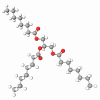
These triglycerides are designed explicitly for formulators interested in highly refined lightweight emollients with excellent after-feel solvents, fixatives, solubilizers, extenders, and carriers.
Fatty acids, alcohols & esters
Fatty acids, alcohols & esters comprise a diverse group of organic compounds defined by lipophilic carbon chains of varying lengths. Many are derived from renewable botanical sources such as palm, coconut, shea, cocoa, or rapeseed oils, while others are synthesized to achieve specific performance profiles. These substances serve as both base materials and functional ingredients in personal care formulations, directly influencing the structural integrity and sensory properties of the formulations.
Several members of this category exhibit dual molecular structure with hydrophilic and lipophilic parts, enabling crucial roles in emulsification, stabilization, thickening, and opacification. Certain esters and alcohol derivatives act as sensory modifiers, imparting a soft, waxy, cooling skin feel and, in some cases, a pearl‑like visual effect without greasy residue.
Structurally similar to the skin’s natural lipids, these compounds function as effective emollients that moisturize, replenish, and reinforce the epidermal barrier to reduce transepidermal water loss (TEWL). Specific fatty acids can be involved in metabolic processes, such as beta‑oxidation, in fibroblasts, providing energy to support cell functions. In advanced formulations, esters and lipid derivatives contribute to sensory and texturizing effects, enhancing anti‑aging and daily care treatments.
Beyond their emollient properties, these lipids act as performance enhancers. Their affinity for the stratum corneum’s lipid matrix allows them to improve penetration rates of active ingredients. Some ingredients are incorporated into advanced delivery systems such as liposomes, solid‑lipid nanoparticles (SLN), and nanostructured lipid carriers (NLC), maximizing stability and localized efficacy.Overall, fatty acids, alcohols & esters represent safe, well‑studied, and environmentally acceptable ingredients. Generally biodegradable and skin‑compatible, they provide a dependable foundation for high‑performance, stable, and sustainable personal care products.
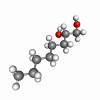
Caprylyl Glycol (1,2-Octanediol) is alcohol (diol contains two hydroxy groups on 1 and 2 positions) colorless liquid derived from raw natural materials, widely used in skin care applications for its humectant, antiseptic, anti-parasitic, antioxidant, and emollient properties.
This fatty alcohol produced from plant oils and natural waxes is used as an emulsifier, emollient, thickener, and carrying agent. It is not drying alcohol.
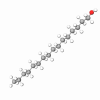
Cetyl alcohol (also know as 1-Hexadecanol) is 16 carbons in length fatty alcohol produced from palm oil and is used as an emollient, emulsifier, thickener, and carrying agent.
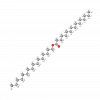
Cetyl Palmitate is a cetyl ester of palmitic acid that has similar properties to whale wax. It is a solid with a melting temperature range of 46-53ºC.
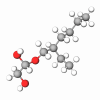
Ethylhexylglycerin is the ether of glycerin and Ethylhexyl alcohol (2-ethylhexhexanol), a multifunctional skincare ingredient that acts as a preservative, emollient, humectant, surfactant, and deodorant.
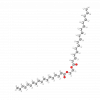
Glycol Distearate is a diester of stearic acid with ethylene glycol, a waxy solid used as an emulsifier (HLB value of ~ 5.5), emulsion stabilizer, and opacifier.
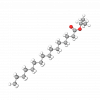
Isopropyl Palmitate is an ester of Isopropyl alcohol and palmitic acid, a lightweight emollient that helps to moisturize skin.
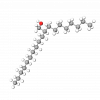
Octyldodecanol is a slightly yellow, clear, odorless fatty alcohol with low polarity, higher stability, and excellent wetting and solubilizing properties.
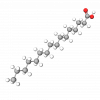
Palmitic acid (Hexadecanoic acid) is a saturated, 16-carbon fatty acid common in animal fats and vegetable oils. It is a white, waxy solid at room temperature.
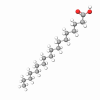
A white, waxy natural fatty acid that comes from vegetable fats and oils. It helps to emulsify, thicken, bind, and stabilize lotions and creams.
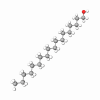
Stearyl alcohol is a saturated aliphatic fatty alcohol of non-animal origin. It is widely used to emulsify, stabilize and opacify emulsions.