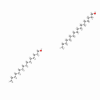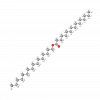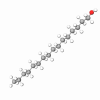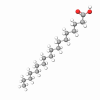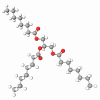
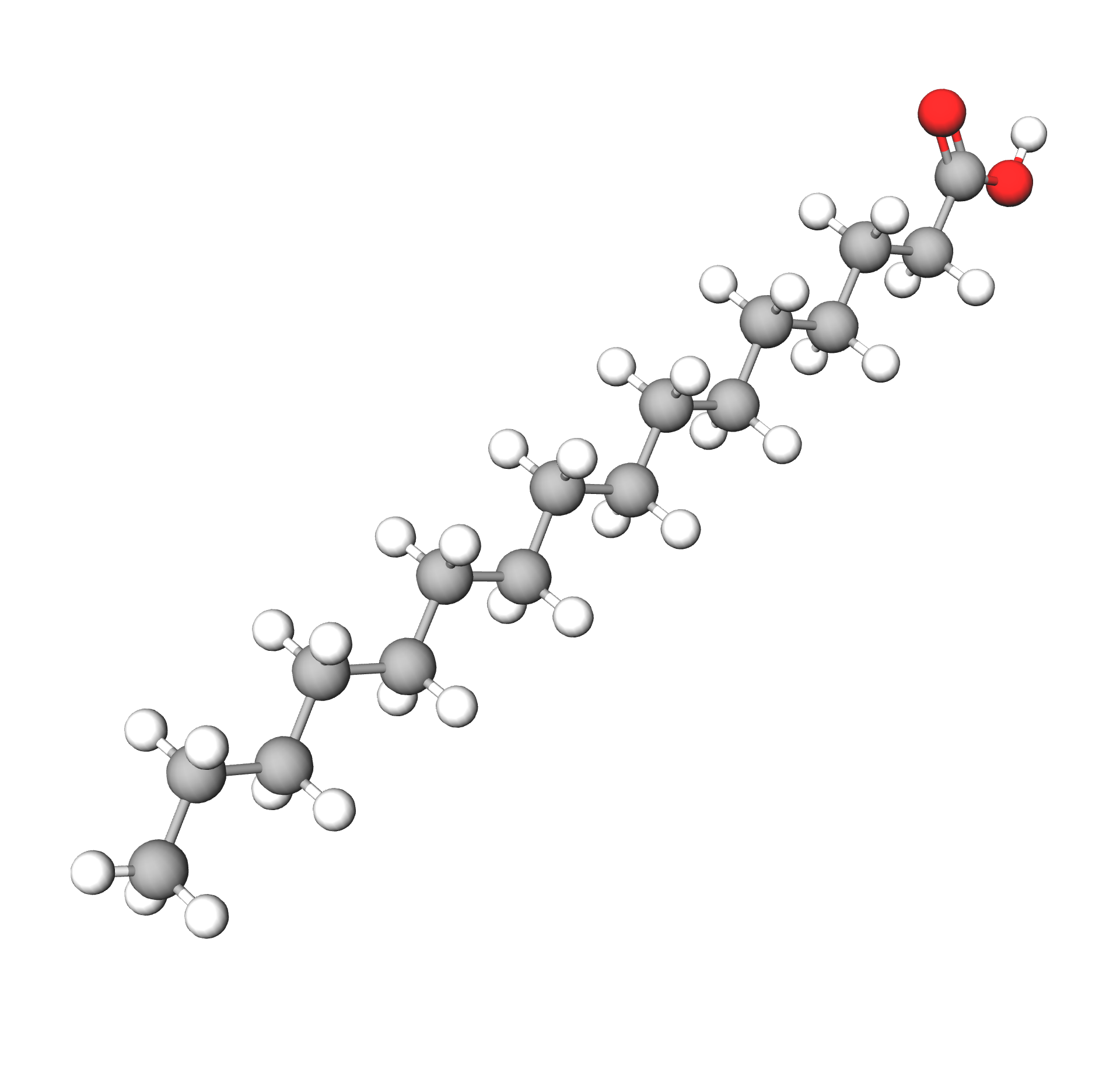
Palmitic acid (Hexadecanoic acid) is a saturated, 16-carbon fatty acid common in animal fats and vegetable oils. It is a white, waxy solid at room temperature. Palmitic acid is a natural, sustainable, and renewable ingredient - the most common fatty acid found in nature, and it makes up about 20-30% of most animal fats and about 10% of vegetable oils.
Palmitic acid can be found in many natural sources such as vegetable oils (palm oil, palm kernel oil, coconut oil) and animal fats (beef tallow, lard), and in dairy products, chocolate, and some processed foods. One of the most common sources of palmitic acid is palm oil. Palm oil is an edible vegetable fat that is derived from the fruit of the Oil palm tree. It is a highly versatile oil used in a wide range of food products, cosmetics, and personal care applications, as well as in biofuels and industrial uses. Palmitic acid makes up around 44% of palm oil. Relatively affordable Coconut oil also contains palmitic acid of around 8-10%.
Palmitic acid is used in many industrial applications, such as manufacturing soaps, candles, plastics, and lubricants. It is also used in the food industry as a nutrient, emulsifier, and thickener. In the cosmetic and personal care industry, it is used in many products, such as lotions, creams, soaps, and other skin and hair care applications. It is a multifunctional ingredient and can serve as an emulsifying agent, thickener, nutrient, and conditioner.
Palmitic acid helps emulsify oil- and water-based formulations, keeping them stable and preventing separation. It is also used to thicken personal care products, making them easier to apply and improving the sensory profile. To maintain healthy skin and hair, Palmitic acid moisturizes and nourishes cells while reducing dryness, roughness, and flakiness. In combination with alkalis, Palmitic acid can act as a surfactant (reducing the surface tension of liquids), useful in cleansing applications to remove dirt, oil (excess sebum), and other impurities from the skin and hair. It also enhances the penetration rates of some active ingredients.It is a safe, biodegradable ingredient, but the safety and effectiveness of a product or ingredient should be evaluated based on the entire formulation, not just the presence of palmitic acid. As with any compound, palmitic acid can cause skin irritation, sensitization, or allergic reactions in some individuals.