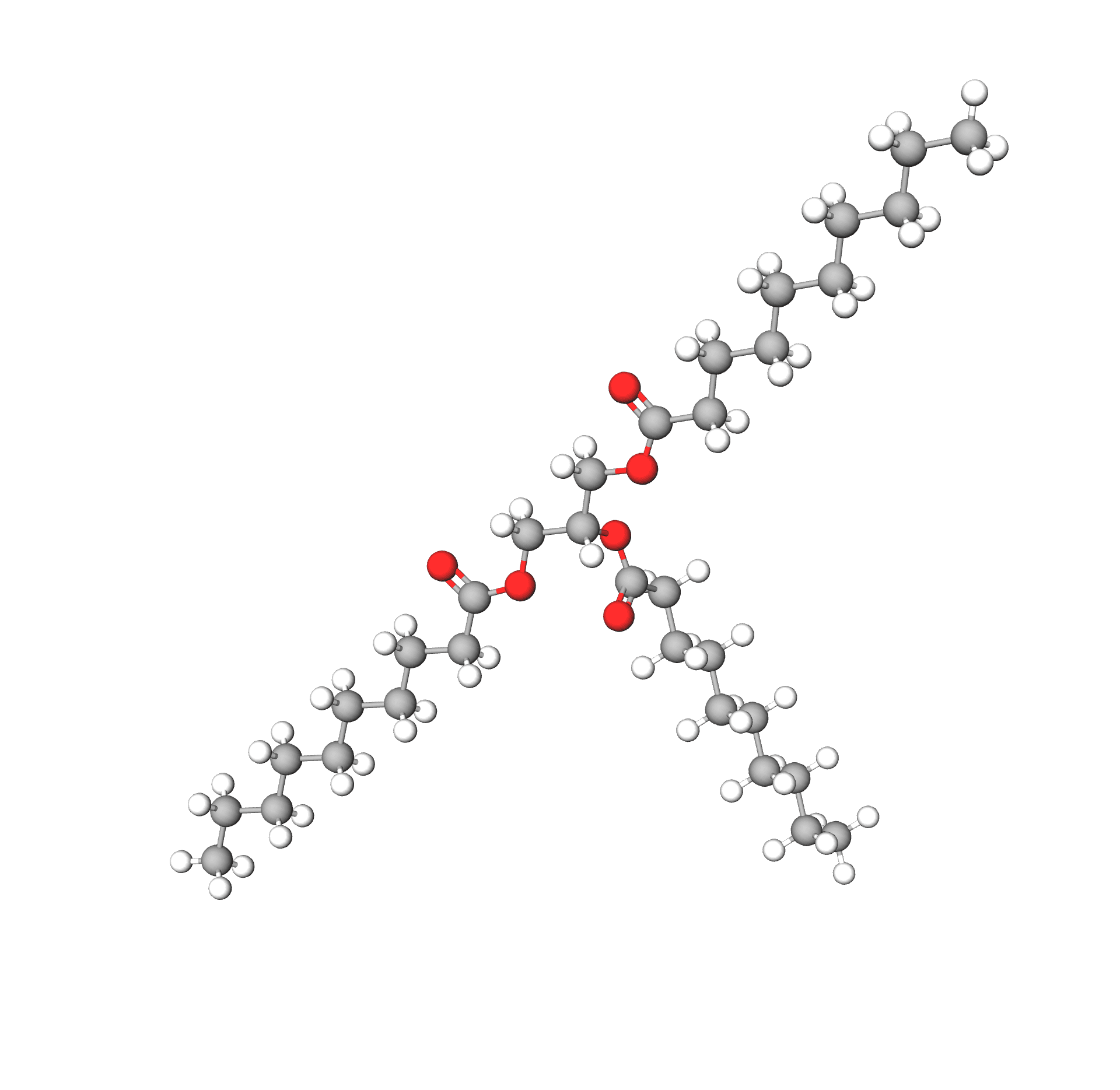
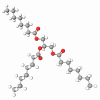
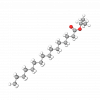
Tricaprin is glyceryl tricaprate, a triglyceride of vegetable-derived capric (C10) fatty acids and glycerin. This medium-chain triglyceride is a pale yellow solid used in the food industry as a fat-replacement "healthy" ingredient and in cosmetics as an emollient.
In personal care applications, Tricaprin provides a pleasant, soft, luxurious, silky feel on the skin. It forms a long-lasting, water-resistant film on the skin and imparts a cooling effect.
Thanks to its sheen and creamy texture, Tricaprin is used in skin care creams, lotions, and decorative cosmetics. It is an ideal ingredient for lipsticks and lip care applications because of its sharp melting-point range and lubricating, protective, non-greasy emollient properties.
Tricaprin can be used as a penetration enhancer and delivery vehicle that improves permeation levels and bioavailability of active ingredients. Combined with Tristearin, Tricaprylin, and Polysorbate 20 in different proportions, it forms nanoparticles used in many modern delivery systems.
Tricaprin is a safe, non-irritating, and non-sensitizing ingredient for skin, eye, and lip (safe for ingestion) care applications and massage oils. Depending on the product type, the usage level varies from 0.5 to 10%.
Intensified Tricaprin Synthesis Using Multifrequency Ultrasound and Its Application as a Topical Drug Delivery System for Fungal Infections
Author(s):
Khasgiwale Viraj N., Waghmare Jyotsna T., Gogate Parag R.
DOI:
10.1021/acs.iecr.5c02112
Nanostructured lipid systems modified with waste material of propolis for wound healing: Design, in vitro and in vivo evaluation
Author(s):
Rosseto Hélen Cássia, Toledo Lucas de Alcântara Sica de, Francisco Lizziane Maria Belloto de, Esposito Elisabetta, Lim Yunsook, Valacchi Giuseppe, Cortesi Rita, Bruschi Marcos Luciano
DOI:
10.1016/j.colsurfb.2017.07.029
Lipid Oxidation and Degradation Products in Raw Materials: Low‐Fat Topical Skin‐Care Formulations
Author(s):
Thomsen Birgitte R., Taylor Richard, Hyldig Grethe, Blenkiron Peter, Jacobsen Charlotte
DOI:
10.1002/aocs.12087
Final report on the safety assessment of trilaurin, triarachidin, tribehenin, tricaprin, tricaprylin, trierucin, triheptanoin, triheptylundecanoin, triisononanoin, triisopalmitin, triisostearin, trilinolein, trimyristin, trioctanoin, triolein, tripalmitin
Author(s):
Johnson W Jr, Cosmetic Ingredient Review Expert Panel
Ethylhexylglycerin is the ether of glycerin and Ethylhexyl alcohol (2-ethylhexhexanol), a multifunctional skincare ingredient that acts as a preservative, emollient, humectant, surfactant, and deodorant.
Octyldodecanol is a slightly yellow, clear, odorless fatty alcohol with low polarity, higher stability, and excellent wetting and solubilizing properties.
These triglycerides are designed explicitly for formulators interested in highly refined lightweight emollients with excellent after-feel solvents, fixatives, solubilizers, extenders, and carriers.
Cetyl alcohol (also know as 1-Hexadecanol) is 16 carbons in length fatty alcohol produced from palm oil and is used as an emollient, emulsifier, thickener, and carrying agent.
Isostearic Acid is an exceptionally mild, odor-free liquid fatty acid that offers a light, lubricious feel and can be used in an extensive, broad range of cosmetic applications.
Palmitic acid (Hexadecanoic acid) is a saturated, 16-carbon fatty acid common in animal fats and vegetable oils. It is a white, waxy solid at room temperature.
Glycol Distearate is a diester of stearic acid with ethylene glycol, a waxy solid used as an emulsifier (HLB value of ~ 5.5), emulsion stabilizer, and opacifier.
Caprylyl Glycol (1,2-Octanediol) is alcohol (diol contains two hydroxy groups on 1 and 2 positions) colorless liquid derived from raw natural materials, widely used in skin care applications for its humectant, antiseptic, anti-parasitic, antioxidant, and emollient properties.