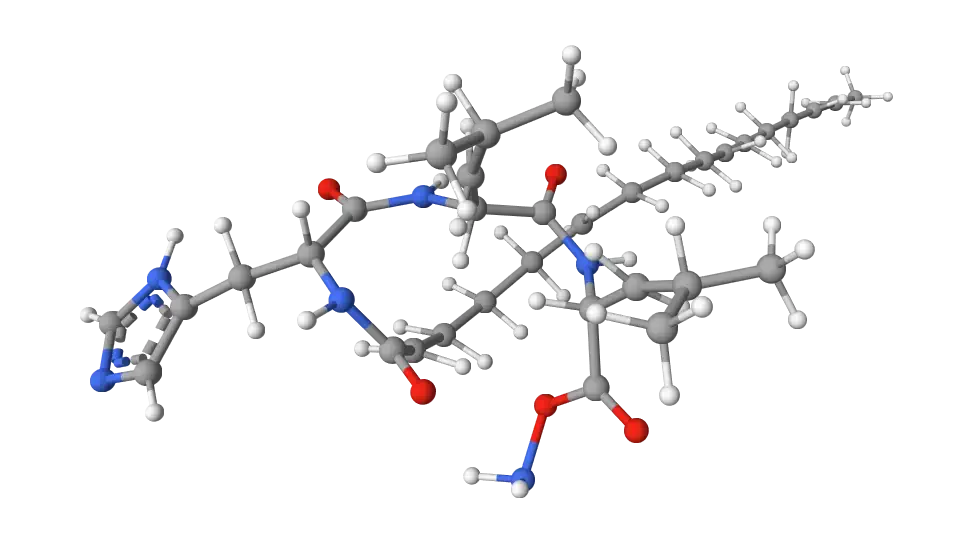
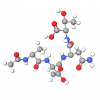
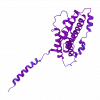
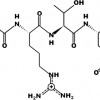
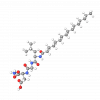
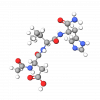
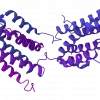
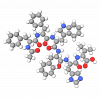
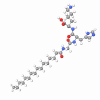
Palmitoyl sh-Tripeptide-2 Amide is a low molecular weight lipo-peptide derived from Tumor Necrosis Factor Receptor (TNFR; Tumor necrosis factor receptor superfamily member 1B) that inhibits TNF-α (Tumor Necrosis Factor-α; Tumor Necrosis Factor). It has the sequence Pal-His-Leu-Leu-NH2 and is known under the trade name Tenefrin™.
TNF-α, or Tumor Necrosis Factor, is a proinflammatory cytokine produced in the skin after UVB exposure. It is also involved in inflammatory processes in Psoriasis, and TNF-α antagonists are usually prescribed to those patients.
According to the manufacturer, Palmitoyl sh-Tripeptide-2 Amide acts as an antagonist of TNF-α, an inflammatory factor, and, when applied topically, soothes irritated skin and leaves a noticeable anti-inflammatory effect.
Palmitoyl sh-Tetrapeptide-2 Amide is a lipo-peptide that inhibits Interleukin-1R, an inflammatory cytokine receptor, soothing skin irritation and acting as an anti-inflammatory agent.
Acetyl Tetrapeptide-40 is a synthetic peptide that decreases the release of pro-inflammatory interleukins (IL-6 and IL-8), fighting against skin redness, erythema, and telangiectasias.
Decapeptide-19 is a synthetic peptide with the sequence Ala-Cys-Asp-Gly-Arg-Thr-Gln-Ala-Leu-Cys that inhibits the specific biological activity of TNF-α cytokine and exhibits anti-inflammatory and hair growth-promoting pr
Palmitoyl sh-Tripeptide-4 Amide is a low molecular weight lipo-peptide (316.3 Da) derived from CD99, a cell membrane antigen-like multifunctional protein that is expressed in human cells.
sh-Polypeptide-6 is a synthetic recombinant single-chain peptide, an analog of human Interleukin 10 (IL-10). Interleukin 10 is an anti-inflammatory cytokine that regulates the immune response and antibody production.
Delisens™ is a peptide-based complex ingredient widely used in personal care products with soothing, anti-inflammatory, anti-allergic, and hydrating effects.
Haloxyl™ is a peptide complex based on four biologically active molecules, including matrikine lipopeptides Palmitoyl Tripeptide-1 (Pal-GHK) and Palmitoyl Tetrapeptide-7 (Pal-GQPR), iron chelating N-hydroxysuccinimide (NHS), and a flavonoid chrysin, that eliminates under-eye bags and dark circles.
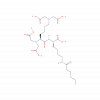
Tetracarboxymethyl Hexanoyl Dipeptide-12 is a synthetic peptide derivative that enhances the expression of genes responsible for adiponectin production while inducing dermal cells' protective autophagy.