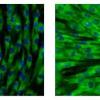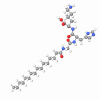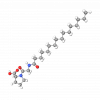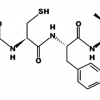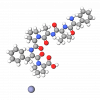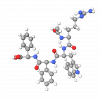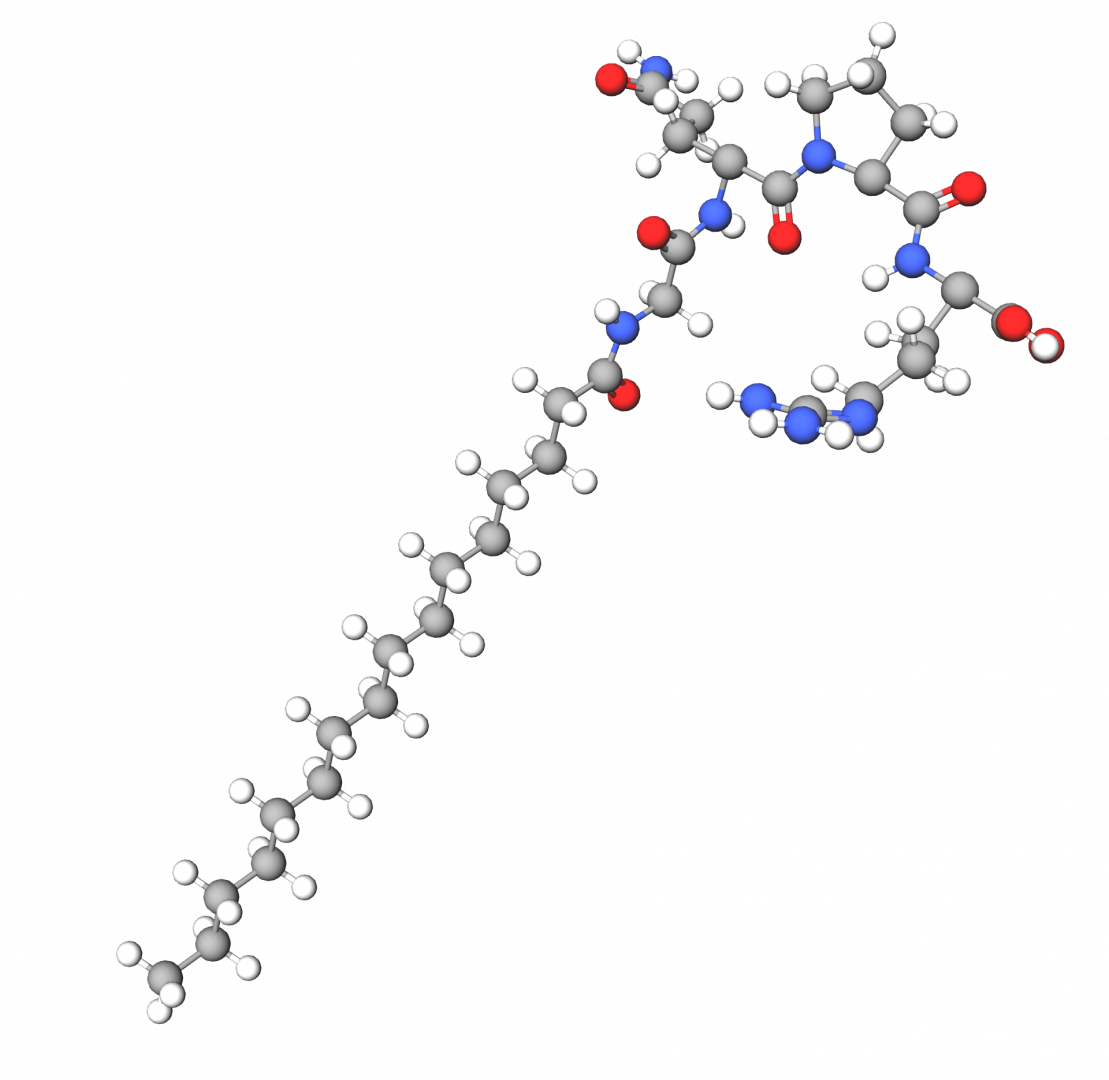
Palmitoyl Tetrapeptide-7 (also known as Rigin™; former designation: Palmitoyl Tetrapeptide-3) is a lipopeptide with immunomodulating properties from Sederma designed to mimic DHEA activity and restore cytokine balance to mature skin. The lipo-tetrapeptide with sequence Pal-GQPR (Pal-Gly-Gln-Pro-Arg), a fragment of immunoglobulin G (sequence 224-227), is sometimes referred to as the "youth hormone molecule."
DHEA (Dehydroepiandrosterone) levels decrease with aging, leading to increased interleukin-6 levels. Palmitoyl Tetrapeptide-7 helps skin look younger by correcting this imbalance and reducing the basal and UV-induced secretions of interleukin-6 in the keratinocytes and fibroblasts, just as DHEA does.
In addition, Palmitoyl Tetrapeptide-7 stimulates phagocytosis similar to Tuftsin (another peptide derived from the sequence of human IgG), improving natural defence mechanisms, clearing cellular debris, and removing alien compounds.
Combined with Palmitoyl Tripeptide-1, Rigin is used in Sederma's famous peptide-based complex called Matrixyl 3000. The complex exhibits noticeable anti-aging effects thanks to a balanced blend of biologically active peptides and complementary action, used in many advanced formulations.F.A.Q.
How Palmitoyl Tetrapeptide-7 keeps the skin younger?
Palmitoyl Tetrapeptide-7 reduces Interleukin-6 (IL-6) production by the critical cells keratinocytes and fibroblasts in the skin. Interleukin-6 is a mediator of inflammation that leads to more rapid degradation of the extracellular matrix components, promoting wrinkles formation and lessening firmness and elasticity of the skin.
Reduction of IL-6 and other pro-inflammatory agents, Palmitoyl Tetrapeptide-7, protects extracellular matrix components from degradation, preserving skin's natural youthfulness and boosting its replenishment.
References
- Rigin, another phagocytosis-stimulating tetrapeptide isolated from human IgG. Confirmations of a hypothesisPMID:7309346DOI:10.1111/j.1399-3011.1981.tb02011.x
- Determination of an unusual secondary structural element in the immunostimulating tetrapeptide rigin in aqueous environments: insights via MD simulations, (1)H NMR and CD spectroscopic studiesPMID:20629117DOI:10.1002/psc.1260
- Characterization of a novel type VII beta-turn conformation for a bio-active tetrapeptide rigin A synergy between theoretical and experimental resultsPMID:10691984DOI:10.1046/j.1432-1327.2000.01144.x
- Topical peptides as cosmeceuticalsPMID:27451932DOI:10.4103/0378-6323.186500
- Usage of Synthetic Peptides in Cosmetics for Sensitive SkinPMID:34451799DOI:10.3390/ph14080702
- Immunoglobulin heavy constant gamma 1 (P01857 · IGHG1_HUMAN)
- Safety Assessment of Tripeptide-1, Hexapeptide-12, Their Metal Salts and Fatty Acyl Derivatives, and Palmitoyl Tetrapeptide-7 as Used in CosmeticsDOI:10.1177/1091581818807863