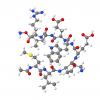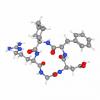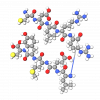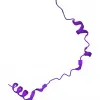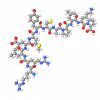
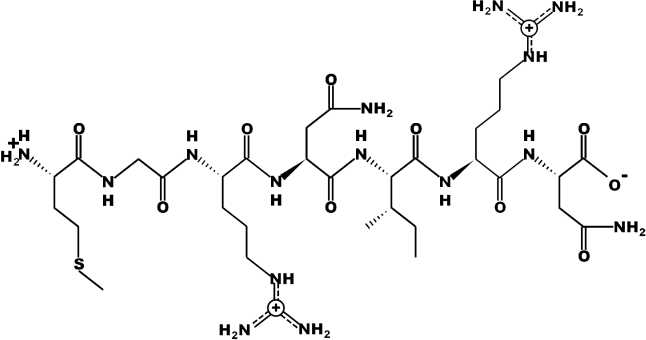
Heptapeptide-7 is a synthetic peptide with the sequence Met-Gly-Arg-Asn-Ile-Arg-Asn, a fragment of a well-studied peptide HB-107 with wound-healing and anti-aging properties. HB-107 was derived from another murine peptide, Cecropin B, which exhibits antibacterial, wound-repair, and increased leukocyte infiltration effects.
HB-107 has no antimicrobial action, but speeds up cutaneous wound healing. When applied to wounds, it demonstrated keratinocyte hyperplasia and increased leukocyte infiltration due to IL-8 (interleukin-8) production by endothelial cells.
Ex vivo studies showed that Heptapeptide-7 promotes keratinocyte proliferation and migration. It also enhances collagen production by fibroblasts and exhibits EGF-like activity. Microarray tests revealed that Heptapeptide-7-treated skin keratinocytes divide more rapidly and have upregulated genes responsible for growth factors and ECM (extracellular matrix) component production.
A clinical study (participated 32 women with a mean age of 54) using a preparation with Heptapeptide-7 validated laboratory test results. Participants reported reduced forehead wrinkles, improved skin texture, and overall skin condition.Incorporated into skin care applications with a liposomal delivery system, Heptapeptide-7 improves skin elasticity, fights sagging, and boosts regeneration, revealing a youthful, healthy, radiant appearance. It is known under the trade name Gransome Heptapeptide-7.