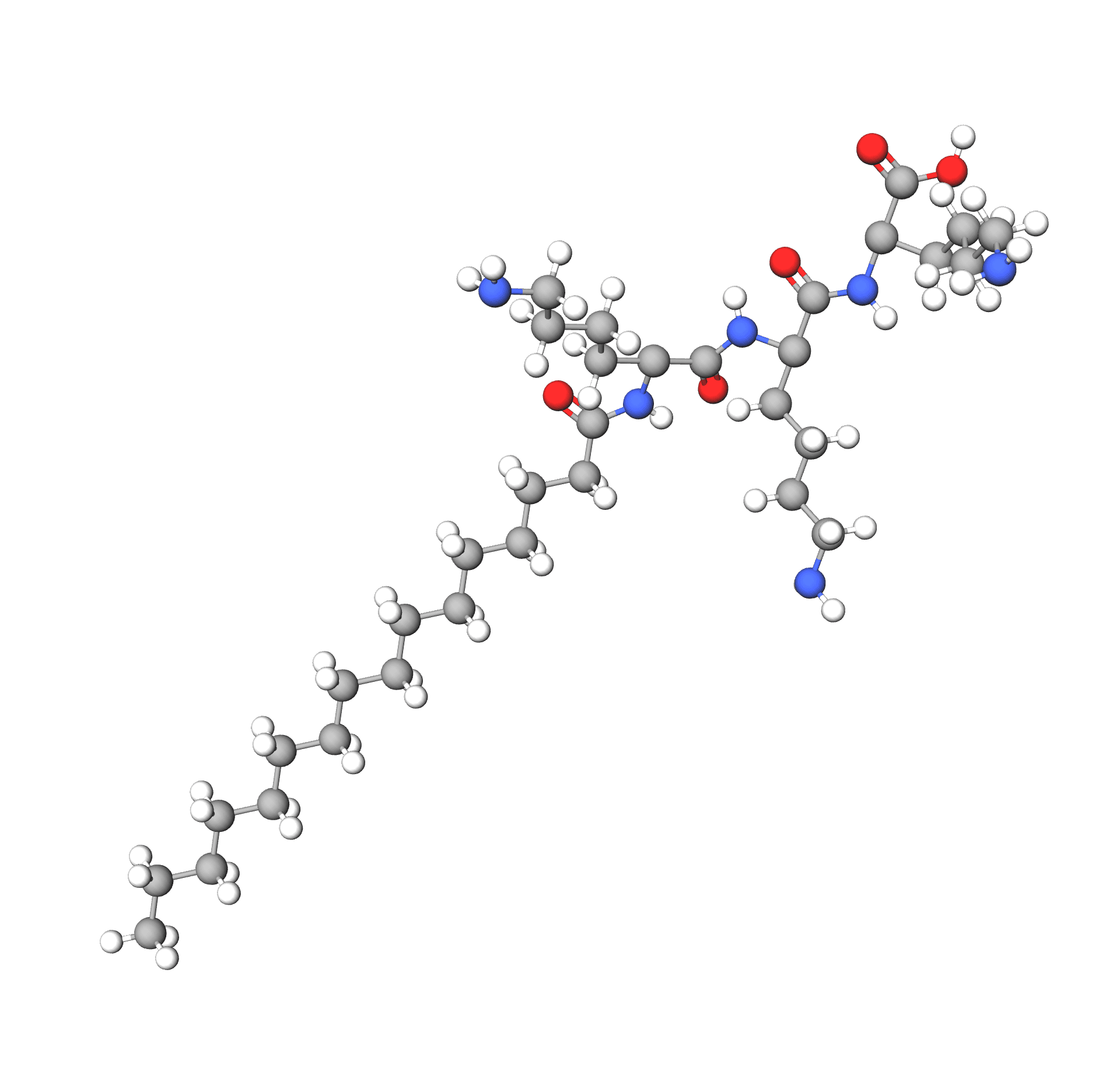
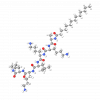
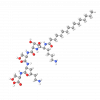
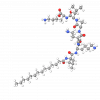
Palmitoyl Tripeptide-36 (Palmitoyl Trilysine) is a synthetic amphiphilic lipo-peptide that exhibits antimicrobial activity. It inhibits the growth of Staphylococcus aureus and other bacteria and fungi. The peptide sequence is Palmitoyl-Lys-Lys-Lys-OH and is known under the trade name DermaPep™ M330.
Scientific studies showed that amphiphilic lipopeltides containing positively charged Lysine chains with 2-5 residues form micelle-like structures with antibacterial properties. Those cationic peptide amphiphiles damage negatively charged bacterial membranes, leading to cell death. They have been shown to be effective against methicillin-resistant Gram-positive and Gram-negative bacteria at very low minimum inhibitory concentrations.
Palmitoyl Trilysine is a classic antibacterial peptide amphiphile with proven antimicrobial and anti-biofilm formation properties. Palmitoyl Tripeptide-36 is a suitable antimicrobial agent for skin care in patients with Atopic Dermatitis (AD). When combined with Azelaic acid, it is used in specialized complexes for acne treatment products.
Cationic amphiphiles, a new generation of antimicrobials inspired by the natural antimicrobial peptide scaffold
Author(s):
Findlay B, Zhanel GG, Schweizer F
PMID:
20696877
DOI:
10.1128/AAC.00530-10
Design, Synthesis, and Nanostructure-Dependent Antibacterial Activity of Cationic Peptide Amphiphiles
Author(s):
Rodrigues de Almeida Nathalia, Han Yuchun, Perez Jesus, Kirkpatrick Sydney, Wang Yilin, Sheridan Martin Conda
DOI:
10.1021/acsami.8b17808
Conformal Electrodeposition of Antimicrobial Hydrogels Formed by Self‐Assembled Peptide Amphiphiles
Author(s):
Zaldivar Gervasio, Feng Jiachen, Lizarraga Leonardo, Yu Yafan, de Campos Luana, de Oliveira Kelly Mari Pires, Piepenbrink Kurt H., Conda‐Sheridan Martin, Tagliazucchi Mario
DOI:
10.1002/admi.202300046
Self-Assembled Nanostructures of Peptide Amphiphiles: Charge Regulation by Size Regulation
Author(s):
Zaldivar Gervasio, Vemulapalli Sridhar, Udumula Venkatareddy, Conda-Sheridan Martin, Tagliazucchi Mario
Oligopeptide-10 is a 15-amino-acid-long peptide with the sequence Phe-Ala-Lys-Ala-Leu-Lys-Ala-Leu-Leu-Lys-Ala-Leu-Lys-Ala-Leu. It is a water-soluble white powder, compatible with all emulsion types in the 5-7 pH range.
Palmitoyl Hexapeptide-26 is a synthetic lipopeptide with antimicrobial, skin-calming, and redness-reducing properties. It is also known under the trade name Shield Bact Peptide.
Acetyl Dipeptide-3 Aminohexanoate (sequence Ac-Arg-Ala-Ahx-OH), also known under the trade name Bodyfensine®, is a tripeptide that boosts the skin's natural peptidic protection against harmful microbes.
InvisaSkin®-64 Anti-Acne Treatment is a peptide-based complex a unique combination of hydrating delivery vehicle, anti-microbial peptide, and salicylic acid offers a gentle approach to treating the symptoms of acne.
Oligopeptide-76 is a synthetic biomimetic 13 amino acid long peptide, an analog of natural Aurein 1.2 peptide produced in the skin of the Litoria Aurea frog.
Palmitoyl-KTSKS (Palmitoyl Pentapeptide-4) is a synthetic lipo-peptide developed by Sederma with selective antimicrobial (not bacteriocide) activity and known under the trade name BB-Biont™.
Myristoyl Pentapeptide-17 is a bioavailable lipo-oligopeptide (sequence Myr-Lys-Leu-Ala-Lys-Lys-NH2) with eyelash-enhancing action. In addition, it has anti-aging, anti-inflammatory, and anti-bacterial properties.
Myristoyl Hexapeptide-16 is an eyelash booster lipo-peptide with sequence Myr-Leu-Lys-Lys-Ala-Leu-Lys that stimulates multiple genes responsible for keratin (hair protein) production.
Myristoyl Octapeptide-1 is a synthetic lipo-peptide that mimics growth factors, promoting dermal tissue repair processes and accelerating wound healing.