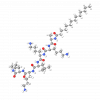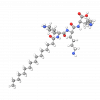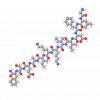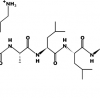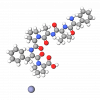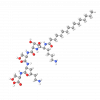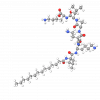
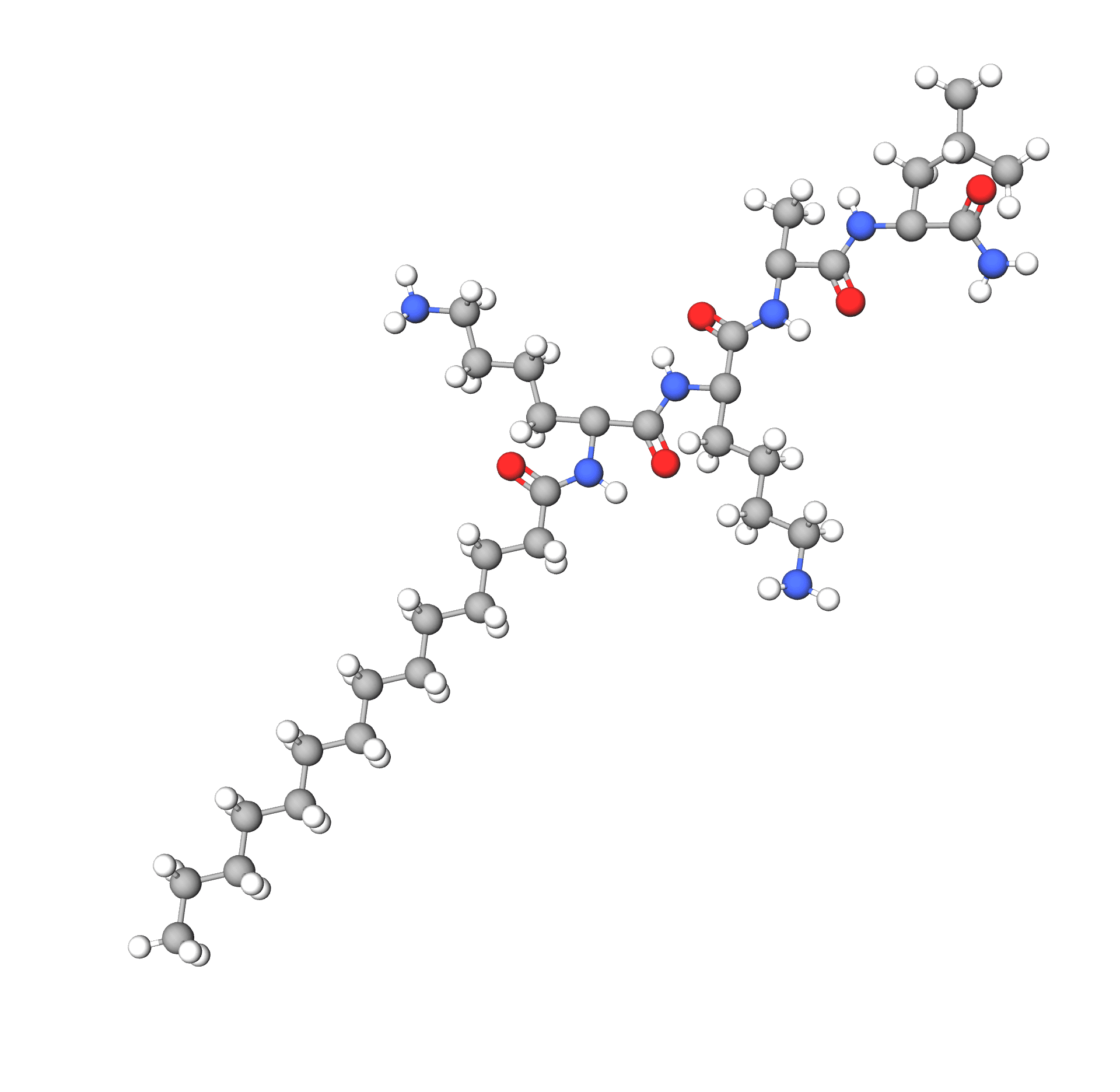
Myristoyl Tetrapeptide-13 is a synthetic amphiphilic cationic lipopeptide with potent antimicrobial activity. It has the sequence Myr-Lys-Lys-Ala-Leu-NH2 and is known under the trade name Dermalysins® P291.
Amphiphilic peptides can form micelle-like structures that damage bacterial membranes, exhibiting antibiotic-like bacteriostatic or bactericidal effects. Bacteria are usually unable to generate resistance (unlike antibiotics) against amphiphilics, which are effective against many methicillin-resistant Gram-positive and Gram-negative strains.
Myristoyl Tetrapeptide-13 is designed to work alone or in combination with other antibacterial agents as an anti-acne active or a performance-enhancing preservative or preservative booster. In small quantities, it enhances the biocidal properties of formulation preservation systems.
Myristoyl Tetrapeptide-13 works well on its own or can boost the acne-fighting ability of benzoyl peroxide and salicylic acid. It promotes recovery and healing and accelerates the regeneration of healthy skin.