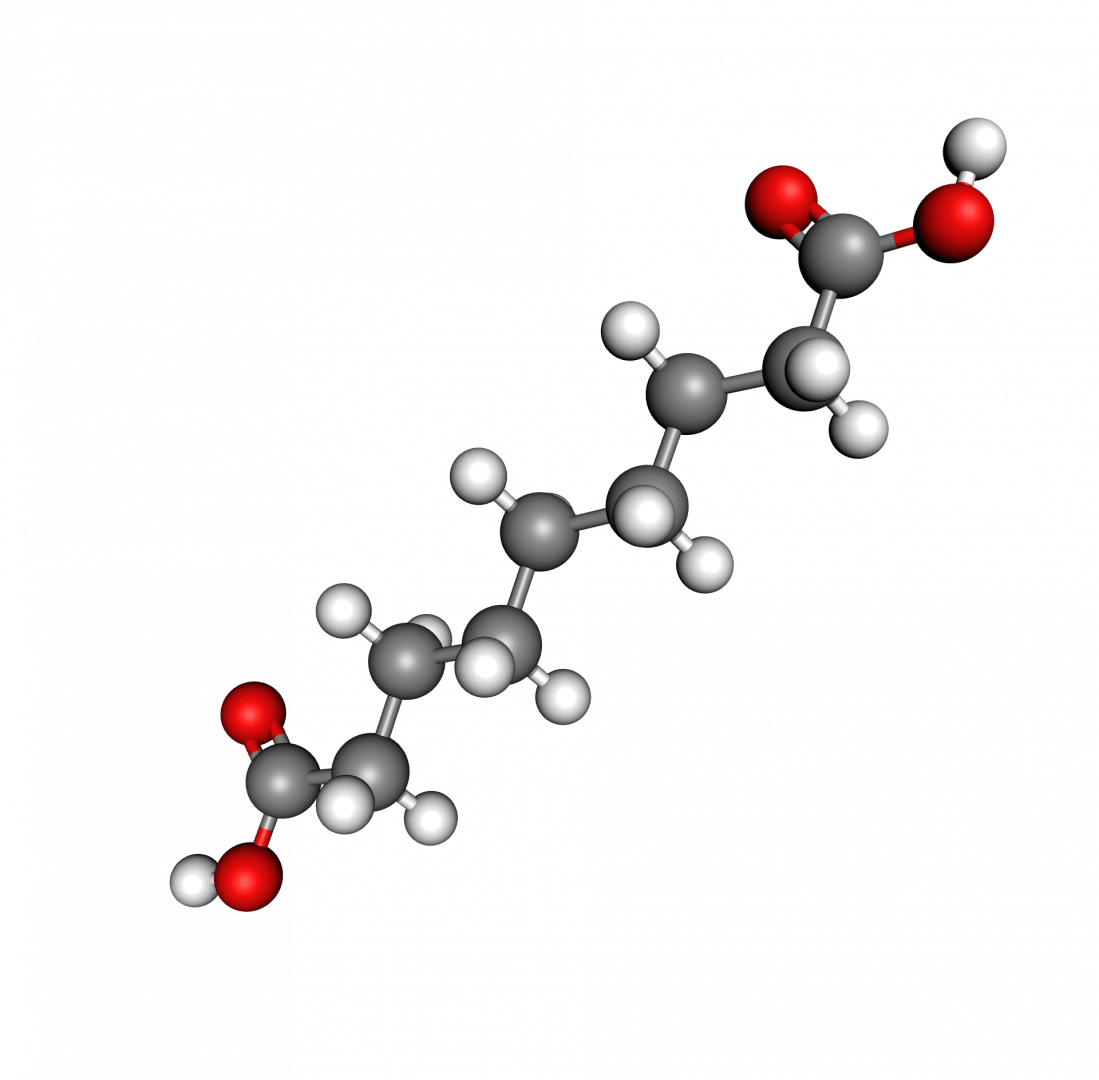
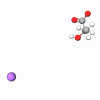
Azelaic acid is another effective ingredient for oily or problem skin, or for skin with rosacea. It helps to prevent inflammation and its marks, soothes, and relieves redness and swelling. Azelaic acid is obtained from cereals.
It's well-studied, and research has shown it works in several ways: cleans pores, evens skin texture, brightens post-acne areas, and helps reduce skin sensitivity. In addition, it is a mild exfoliator that removes old or dead cells from the skin surface and helps combat hyperkeratosis.
Also note that the working concentration of azelaic acid is 10% (available without a prescription). Tocopherol, which is part of the ingredient, protects lipid molecules from damage, reduces the negative effect of ultraviolet radiation on skin cells, and promotes skin recovery and healing.
Zinc oxide in the composition has a drying and anti-inflammatory effect, normalizes the skin's trace element balance, and prevents hyperkeratosis. Azelaic Acid slows down the formation of age spots and is recommended for problem skin prone to rashes, inflammation, and acne.
Changed
References
Final report of the Cosmetic Ingredient Review Expert Panel on the safety assessment of dicarboxylic acids, salts, and esters
Author(s):
Fiume MM, Heldreth B, Bergfeld WF, Belsito DV, Hill RA, Klaassen CD, Liebler D, Marks JG, Shank RC, Slaga TJ, Snyder PW, Andersen FA
PMID:
22869895
DOI:
10.1177/1091581812447203
Guidelines of care for the management of acne vulgaris
Author(s):
Reynolds RV, Yeung H, Cheng CE, Cook-Bolden F, Desai SR, Druby KM, Freeman EE, Keri JE, Stein Gold LF, Tan JKL, Tollefson MM, Weiss JS, Wu PA, Zaenglein AL, Han JM, Barbieri JS
PMID:
38300170
DOI:
10.1016/j.jaad.2023.12.017
A systematic review to evaluate the efficacy of azelaic acid in the management of acne, rosacea, melasma and skin aging
Author(s):
King S, Campbell J, Rowe R, Daly ML, Moncrieff G, Maybury C
PMID:
37550898
DOI:
10.1111/jocd.15923
Azelaic Acid
Author(s):
Drugs and Lactation Database (LactMed®)
Journal:
National Institute of Child Health and Human Development; 2006
PMID:
30000482
Effects of 15% Azelaic Acid Gel in the Management of Post-Inflammatory Erythema and Post-Inflammatory Hyperpigmentation in Acne Vulgaris
Author(s):
Shucheng H, Zhou X, Du D, Li J, Yu C, Jiang X
PMID:
38734843
DOI:
10.1007/s13555-024-01176-2
The multiple uses of azelaic acid in dermatology: mechanism of action, preparations, and potential therapeutic applications
Author(s):
Sauer N, Oślizło M, Brzostek M, Wolska J, Lubaszka K, Karłowicz-Bodalska K
Moisturizes the skin, smooths, and relieves itching. As one of the most critical soluble substances of the stratum corneum, urea is of increasing importance in dermatological therapy and cosmetics.
A powerful emollient found in the leaf and roots of the comfrey plant, allantoin guards against transepidermal water loss to enhance skin’s moisture content and reveal a smooth, even tone.
Glycyrrhetinic Acid (Enoxolone) is a natural triterpenoid, 18-beta-glycyrrhetinic acid from licorice root. It is used in anti-aging, sensitive skin, and eye products.
It is widely used in skin and hair care preparations thanks to numerous beneficial actions, including humectant, buffering, antiseptic, energizing, thickener, emollient, and preservative.
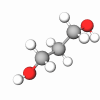
Zemea® propanediol is a skin-friendly, natural, and petroleum-free glycol alternative for cosmetics and personal care formulations. A corn-derived natural ingredient approved by Ecocert™ and the Natural Products Association (NPA).
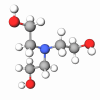
Triethanolamine is an organic amine with three hydroxy groups; thus, it is also a triol. It's a multifunctional ingredient in skin care formulations that acts as an oil-in-water emulsifier, solubilizer, and surfactant.
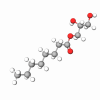
Glyceryl Caprylate is EcoCertified -100% vegetable origin, non-petrochemical; natural fatty acids from pure, renewable resources provide broad-spectrum protection against bacteria, yeast, and mold.
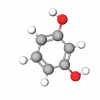
Resorcinol, or 1,3 dihydroxybenzene, is a common chemical intermediate that finds utility in applications ranging from wood glue resins, leather dyes, pharmacology, and permanent hair-coloring products.
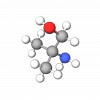
AMP or aminomethyl propanol (2-Amino-2-methylpropanol) is used to adjust the pH (neutralizing agent) in cosmetics. It is a colorless or slightly yellow liquid.
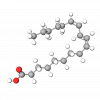
Linoleic acid is an essential fatty acid (EFA). EFAs are fundamental constituents of bio-membranes and precursors of biological substances such as prostaglandins, leukotrienes, and hydroxylated fatty acids.
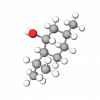
Menthol is a compound obtained from peppermint oil or other mint oils or made synthetically. Menthol has local anesthetic and counterirritant qualities.