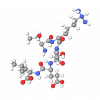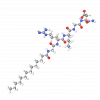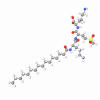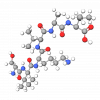
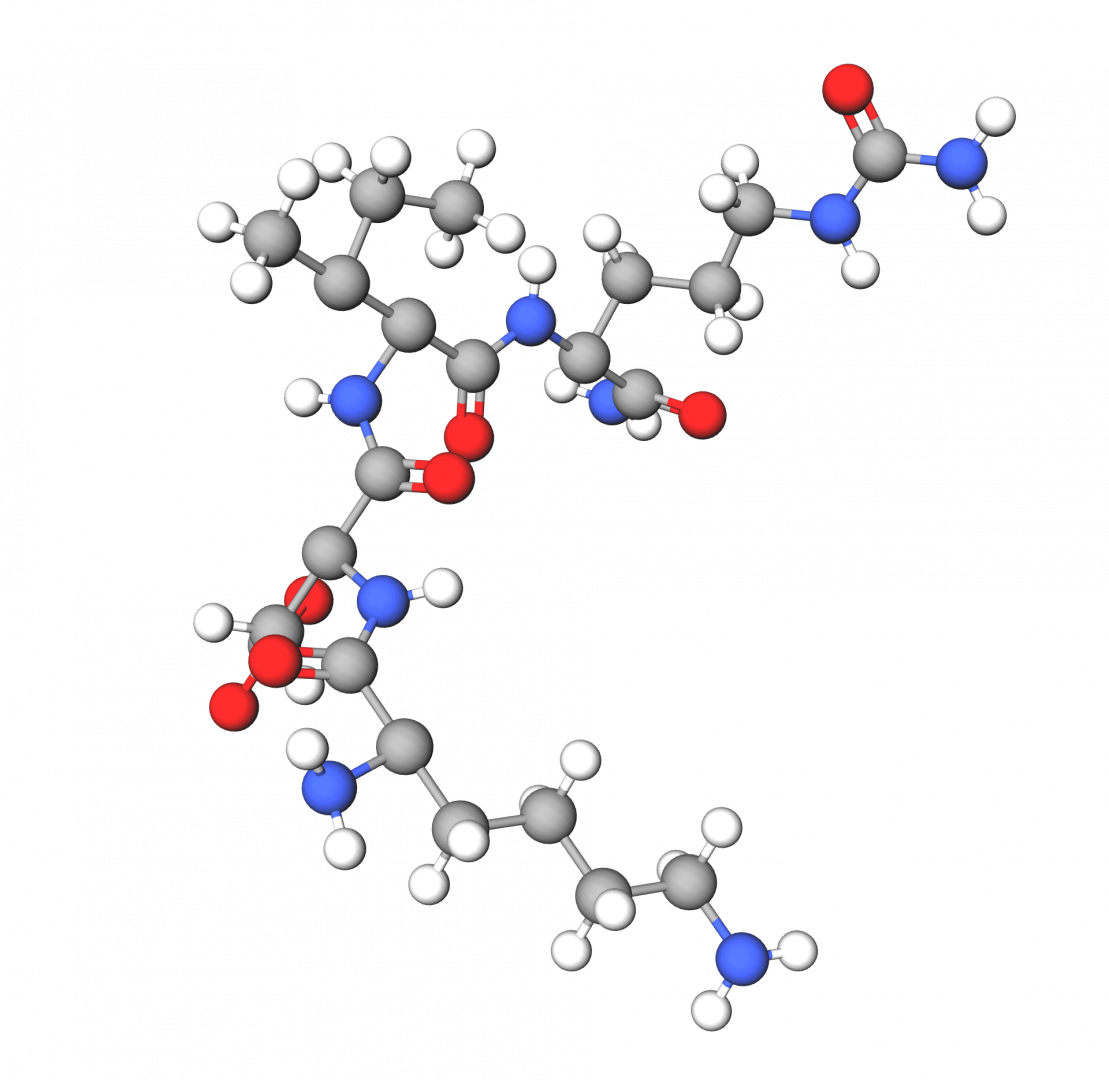
Tripeptide-10 Citrulline is a collagen-organizing tetrapeptide that mimics Decorin, improving collagen structures and restoring the skin's suppleness and resiliency. Thanks to its decorin-like action, it regulates fibrillogenesis and collagen fibril dimensions. It has the sequence Lys-Asp-Ile-Cit-NH2 and is also known under the trade name Decorinyl® (Lipotec).
The aging process makes notable changes in the skin proteins. Decorin is an essential protein in the skin that controls collagen aggregation, equalizes fibril diameters, and maintains a normal packing. Unfortunately, the changes also affect Decorin, which becomes truncated and loses effectiveness over time. This modified form (non-functional) of Decorin, missing in young skin, lacks parts that can interact with collagen. As a result, it has a considerable negative effect on skin firmness and elasticity, leading to morphological changes in collagen organization in mature skin.
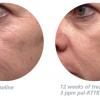
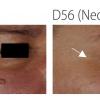
Mimicking the collagen-binding sequences of Decorin, Tripeptide-10 Citrulline modulates collagen fibrillogenesis, resulting in thinner, more uniform fibers. In vitro tests confirmed its effect on collagen fiber organization, better cohesion, and noticeable anti-aging results. Manufacturer's clinical trials with formulas containing Decorinyl showed improvements in collagen fibre quality, a decrease in the standard deviation of collagen fibril diameters, and a 54% increase in skin suppleness within 28 days.
When combined with collagen peptide Tripeptide-1, it is used in a popular peptide-based complex, Trylagen™, where both peptides showed synergistic potentiation, resulting in a better anti-aging effect. Another combination with Acetyl Hexapeptide-8 (Argireline®, formerly Acetyl Hexapeptide-3) was tested to detect possible synergism between peptides, revealing its antiwrinkle activity and potential reduction of transdermal water loss.F.A.Q.
What are the benefits of Tripeptide-10 citrulline?
Tripeptide-10 citrulline regulates fibrillogenesis, controls collagen fibril growth, and increases skin suppleness due to a better cohesion of collagen fibers which provides higher resiliency and improves skin appearance.
Benefits include:
- compensates lack of decorin in mature skin
- binds to collagen fibrils and regulates collagen organization, also enhancing its stability
- ensures uniformity of fibril diameter and the regular spacing of collagen fibrils
- maintains tissue shape and provides skin suppleness
- has a high and sustained moisturizing profile
Collagen boosting is only one part of the solution. Make sure your new fibrils are well-oriented, organized, and uniform.