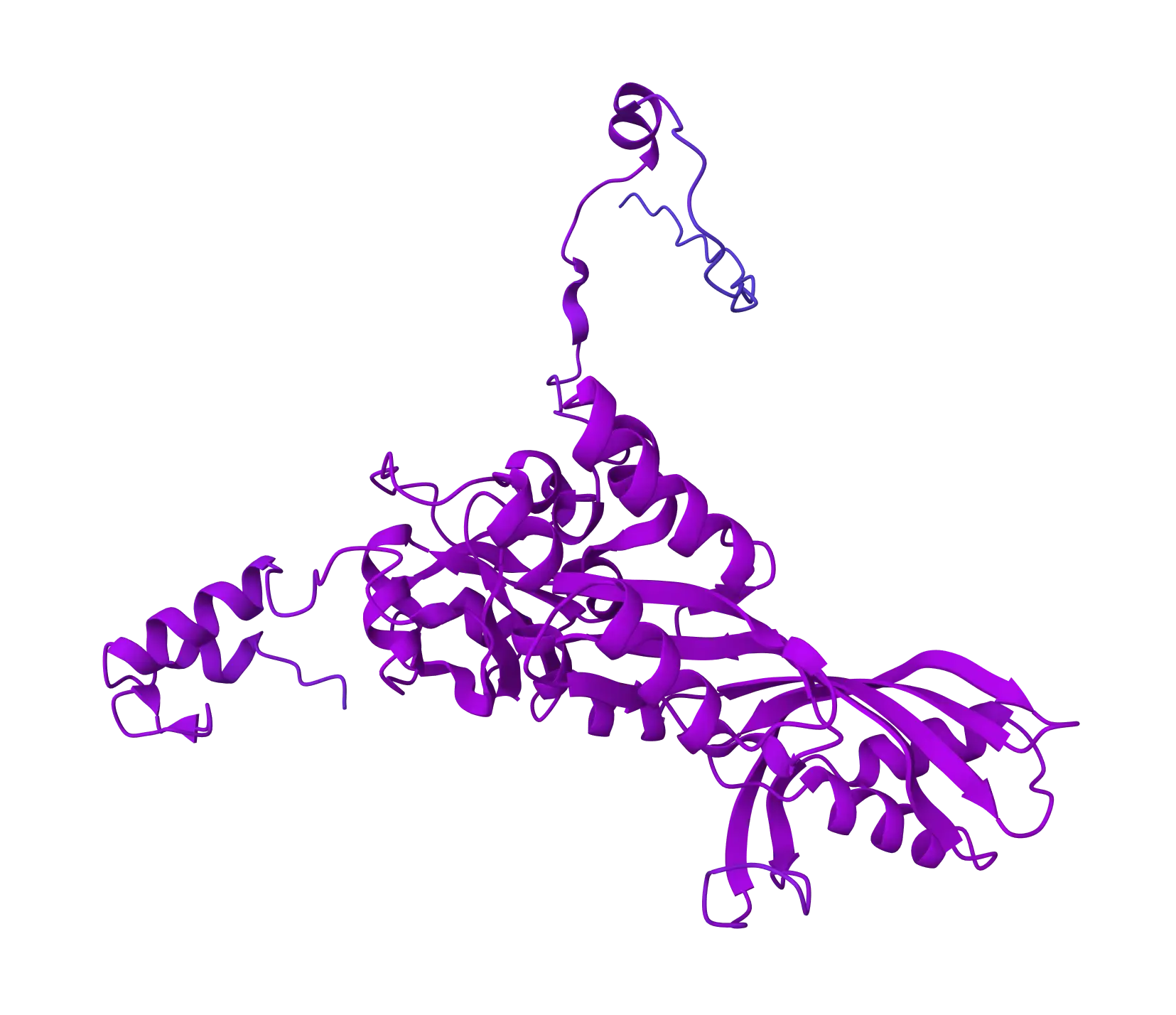
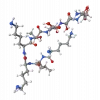
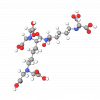
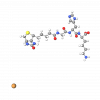
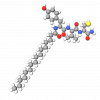
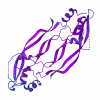
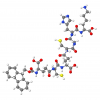
r-(Methionyl sh-Oligopeptide-85) is a synthetic human recombinant peptide, where the initial expression sequence was engineered by appending a methionine initiation codon to the sh‑Oligopeptide‑85 coding region. sh‑Oligopeptide‑85 (retired INCI name) is a human Dyskerin-derived peptide, 55 amino acids long (89-144) from the TruB domain, known in scientific literature as GSE24.2.
Dyskerin is an enzyme that stabilizes RNA molecules and regulates ribosome biogenesis. The DKC1 gene encodes Dyskerin, and mutations in this gene cause X-linked dyskeratosis congenita (X-DC), a premature aging syndrome characterized by irregular dermal pigmentation, nail dystrophy, and mucosal leukoplakia.
Involved in intracellular processes like gene expression regulation, translation, and telomere maintenance, Dyskerin plays an essential role in cell proliferation, DNA protection, and recovery.
When applied topically, r-(Methionyl sh-Oligopeptide-85) packed in biodegradable polymeric PLGA nanoparticles, leaves a significant anti-senescence effect on a cellular level. Encapsulation increased intracellular uptake and bioactivity, including DNA damage rescue and telomerase reactivation.
GSE4, a Small Dyskerin- and GSE24.2-Related Peptide, Induces Telomerase Activity, Cell Proliferation and Reduces DNA Damage, Oxidative Stress and Cell Senescence in Dyskerin Mutant Cells
Author(s):
Iarriccio L, Manguán-García C, Pintado-Berninches L, Mancheño JM, Molina A, Perona R, Sastre L
PMID:
26571381
DOI:
10.1371/journal.pone.0142980
Development of surface modified biodegradable polymeric nanoparticles to deliver GSE24.2 peptide to cells: a promising approach for the treatment of defective telomerase disorders
Expression of the genetic suppressor element 24.2 (GSE24.2) decreases DNA damage and oxidative stress in X-linked dyskeratosis congenita cells
Author(s):
Manguan-Garcia C, Pintado-Berninches L, Carrillo J, Machado-Pinilla R, Sastre L, Pérez-Quilis C, Esmoris I, Gimeno A, García-Giménez JL, Pallardó FV, Perona R
PMID:
24987982
DOI:
10.1371/journal.pone.0101424
Defects in mTR stability and telomerase activity produced by the Dkc1 A353V mutation in dyskeratosis congenita are rescued by a peptide from the dyskerin TruB domain TruB domain
Author(s):
Machado-Pinilla R, Carrillo J, Manguan-Garcia C, Sastre L, Mentzer A, Gu BW, Mason PJ, Perona R
PMID:
22855157
DOI:
10.1007/s12094-012-0865-4
Dyskerin is a component of the Arabidopsis telomerase RNP required for telomere maintenance
Author(s):
Kannan K, Nelson AD, Shippen DE
PMID:
18212040
DOI:
10.1128/MCB.01490-07
Human dyskerin: beyond telomeres
Author(s):
Angrisani Alberto, Vicidomini Rosario, Turano Mimmo, Furia Maria
sh-Oligopeptide-85 SP is a synthetic human recombinant peptide that has the sequence Gly-Phe-Ile-Asn-Leu-Asp-Lys-Pro-Ser-Asn-Pro corresponding to the part of the TruB domain of the human Dyskerin (89-100) protein.
Palmitoyl sh-Tripeptide-1 Amide is a low molecular weight synthetic recombinant lipo-peptide derived from FGF-1 (Fibroblast Growth Factor-1; sequence part 99-101) that is involved in various cellular processes, including angio
An RCS scavenger helps prevent visible signs of premature aging from pollution and photo-aging. Tripeptide-1 is also a signaling peptide that stimulates the synthesis of extracellular matrix components, primarily collagen, hyaluronic acid, and other GAGs.
Oligopeptide-73 is a synthetic peptide known under the trade name CG-EPG that triggers the proliferation of keratinocytes and fibroblasts, protects fibroblasts from oxidative stress, and blocks apoptosis.
The skin is facing many kinds of stress, such as aging, mycobacterium and virus attack, UV and infrared light, and recently issued environmental stress, such as pollen, PM2.5, and PM10, including its harmful components polycyc
Palmitoyl sh-Tripeptide-3 Amide is a low molecular weight lipo-peptide derived from Pro-Epidermal Growth Factor (EGF; sequence position 894-896) that stimulates cell growth, proliferation, and differ
sh-Polypeptide-8 is a synthetic single-chain recombinant analog of human PDGF (Platelet-Derived Growth Factor) that is involved in normal skin growth, healing, and wound repair. rh-PDGF mimics the biological activity of t
Oligopeptide-45 is a synthetic biomimetic peptide that speeds up the development and proliferation of dermal keratinocytes and fibroblasts. It is also known under the trade name CG-Dermaheal.