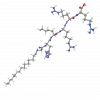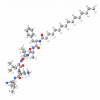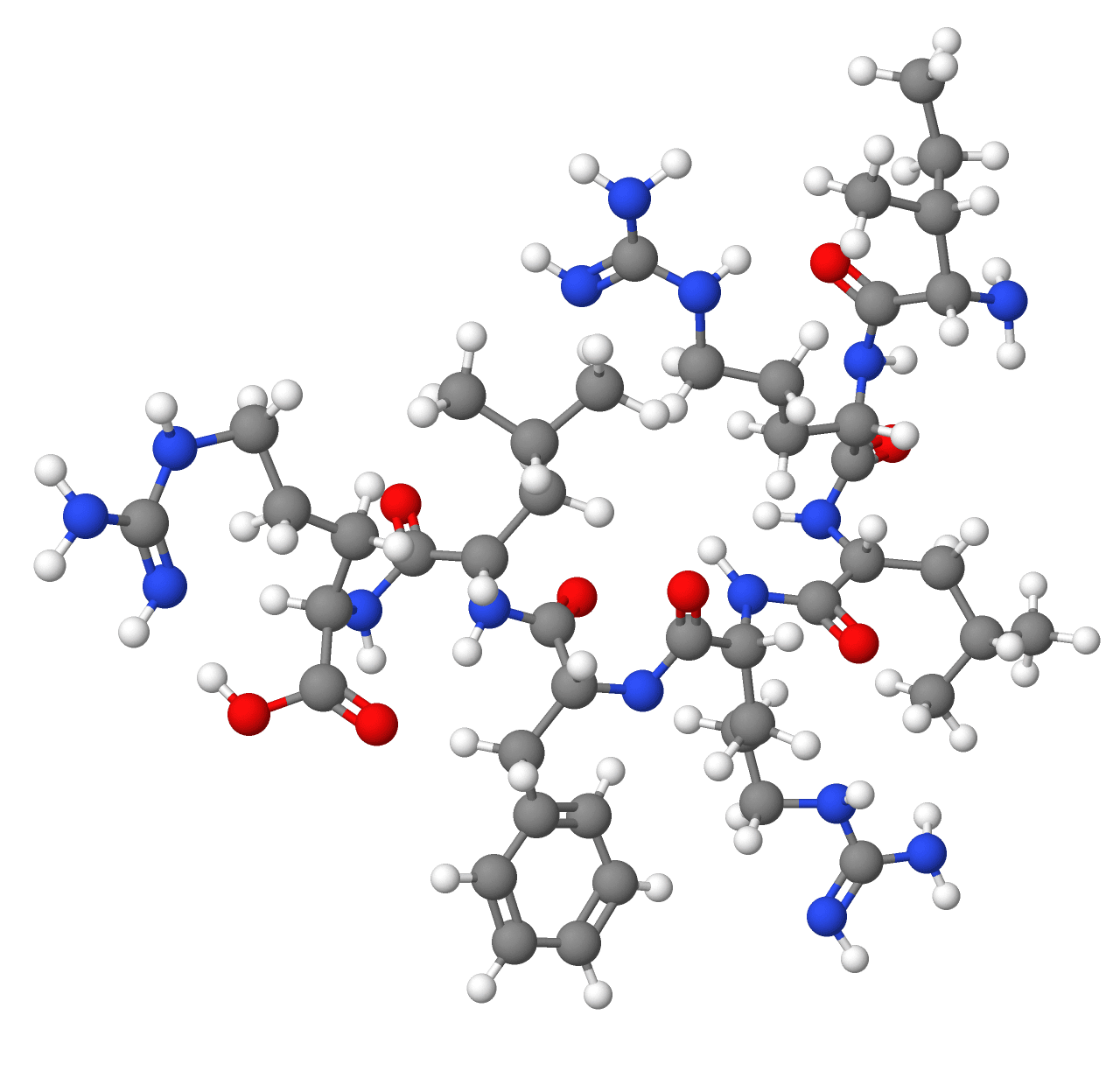
Heptapeptide-8 is a synthetic matrikine peptide that repeats a part of Laminin-5 and mimics its stimulating action. It has the sequence Ile-Arg-Leu-Arg-Phe-Leu-Arg and is also known under the trade name Laminixyl IS™.
Several studies showed that products of proteolytic degradation of Laminin-5 (Laminin-332) or their synthetic analogs act as matrikines. Heptapeptide-8 enhances the production of Laminin-5 and Beta-1 integrin proteins, improving DEJ (dermal-epidermal junction) and entire skin integrity.
In addition, Heptapeptide-8 enhances the production of other integrins and keratin, thereby reinforcing cell-to-cell adhesion and improving the skin's barrier function. This potent peptide also stimulates the synthesis of other extracellular matrix proteins, reviving the skin's fiber network and revealing a firmer, more youthful, smoother surface.
Thanks to its notable anti-aging effect, Heptapeptide-8 is used in many applications to reinforce the cohesion of skin layers (epidermis and dermis), improve cellular communication, and accelerate regeneration. It is a well-studied, effective, and safe ingredient for high-end modern formulations.References
- Deposition of laminin 5 in epidermal wounds regulates integrin signaling and adhesionPMID:10978889DOI:10.1016/s0955-0674(00)00131-9
- The importance of laminin 5 in the dermal-epidermal basement membranePMID:11137397DOI:10.1016/s0923-1811(00)00142-0
- Matrikines and matricryptins: Implications for cutaneous cancers and skin repairPMID:15993569DOI:10.1016/j.jdermsci.2005.05.001
- Processing of laminin α chains generates peptides involved in wound healing and host defensePMID:24458132DOI:10.1159/000357032
- Plasmin induces degradation and dysfunction of laminin 332 (laminin 5) and impaired assembly of basement membrane at the dermal-epidermal junctionPMID:18460030DOI:10.1111/j.1365-2133.2008.08576.x