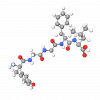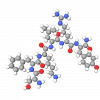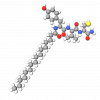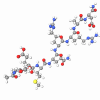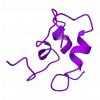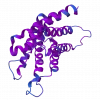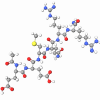
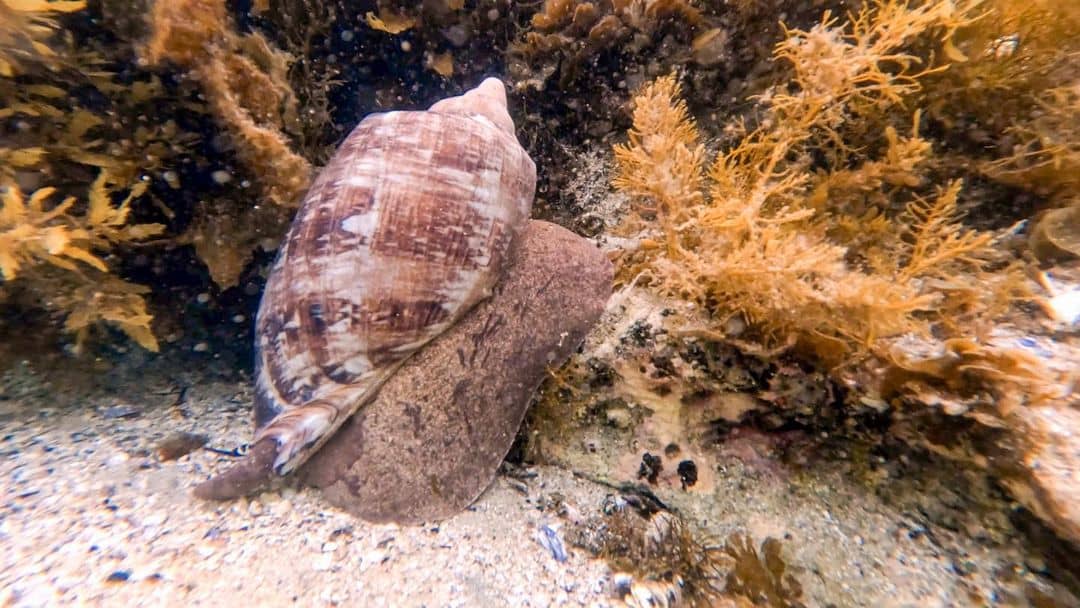
s-Mu-Conotoxin CnIIIC is a synthetic oligopeptide derived from one of the marine cone snails' toxins, also called conotoxins or conopeptides. μ-CnIIIC is a 22-amino-acid-length conotoxin polypeptide obtained from Conus consors, which exhibited muscle-relaxing properties in tests on rodents. It has the following sequence PCA-Gly-Cys-Cys-Asn-Gly-Pro-Lys-Gly-Cys-Ser-Ser-Lys-Trp-Cys-Arg-Asp-His-Ala-Arg-Cys-Cys-NH2.
In humans, the rapid electrical signal from neurons to muscles (for contraction) is transmitted via special voltage-gated sodium channels. There are nine types of voltage-gated sodium channels, each with distinct action potentials (different ion concentrations inside and outside the cell) and tissue-specific expression. So, if a particular toxin is selective, meaning it can block only one type of voltage-gated sodium channel, it can be safely used to manage a specific physiological function.
s-Mu-conotoxin CnIIIC is very selective to NaV 1.4 sodium channels, which are distributed in muscles, and does not block other types of channels, e.g., NaV 1.5 in the heart, NaV 1.8 in dorsal ganglia, or neuronal NaV 1.6-1.7 channels. Thus, it is a safer ingredient that blocks only muscular contractions without adverse effects on other organs and tissues.
Blocking mimic muscles, s-Mu-Conotoxin CnIIIC leaves a long-lasting Botox-like effect, relaxing facial muscles and helping fight mimic wrinkles. Incorporated into high-end skincare applications, this conopeptide delivers a significant anti-aging effect with just a topical application, without injections or invasive procedures.Chem/IUPAC Name: L-Cysteinamide, 5-oxo-L-prolylglycyl-L-cysteinyl-L-cysteinyl-L-asparaginylglycyl-L-prolyl-L-lysylglycyl-L-cysteinyl-L-seryl-L-seryl-L-lysyl-L-tryptophyl-L-cysteinyl-L-arginyl-L-.alpha.-aspartyl-L-histidyl-L-alanyl-L-arginyl-L-cysteinyl-, cyclic (3.fwdarw.15),(4.fwdarw.21),(10.fwdarw.22)-tris(disulfide)