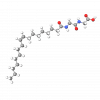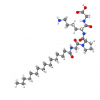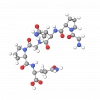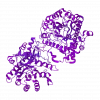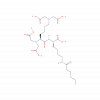
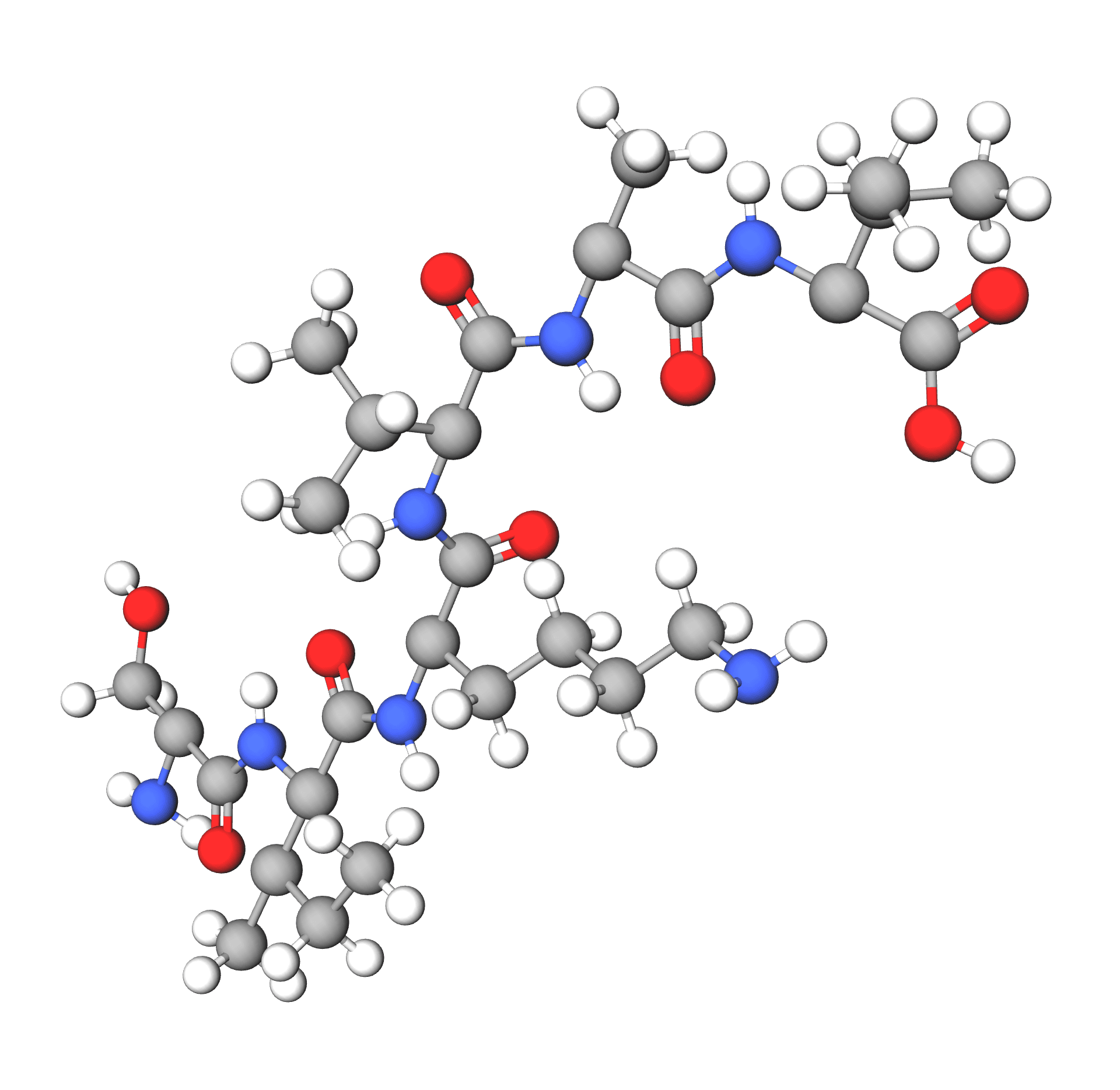
Hexapeptide-10 is a synthetic matrikine peptide (known under the trade name Serilesine®) that repeats an adhesion sequence of Laminin protein (Laminin subunit alpha-1; 2115-2120). It restores the cutaneous structure and leaves a redensifying and restructuring effect on the skin. It is synthesized using solid-phase peptide synthesis, which ensures sequence (Ser-Ile-Lys-Val-Ala-Val; SIKVAV) accuracy and purity of the final product.
From the age of 30, the adhesion between epidermal and dermal cells starts to decrease. The aging process alters certain features of the DEJ (dermo-epidermal junction). Laminin-5 synthesis decreases in aged skin, and deficiencies in integrin expression impair keratinocyte anchoring. Hemidesmosomes formed by α6-Integrin and Laminin-5 are protein structures that anchor points between keratinocytes and the Laminin-5 on the cell's basement membrane.
Mimicking Lamilnin, Hexapeptide-10 promotes keratinocyte adhesion and boosts keratinocyte proliferation by 38% and fibroblast proliferation by 75%. It stimulates fibroblasts to increase Laminin-5 production, which is essential for linking keratinocytes to the basement membrane. It strengthens the dermo-epidermal junction by increasing the production of Laminin 5 and Integrin-α6 proteins and promoting hemidesmosome formation.
By promoting cellular activity in both keratinocytes and fibroblasts, Hexapeptide-10 has a restructuring effect on the skin. It also increases skin compactness, firmness, and density. It is used in many cosmetic formulations, such as emulsions, gels, and serums, at concentrations up to 0.005%.In vivo studies with Hexapeptide-10-conjugated chitosan hydrogel showed promising results in wound re-epithelialization, new blood vessel formation, and overall skin regeneration. It improved DEJ and enhanced collagen production, cell proliferation, and differentiation. Other studies showed that SIKVAV has the potential to promote tumor progression and vascularization, so applications with this peptide should be used with caution, and we recommend consulting a physician if they experience adverse reactions or changes in skin condition.