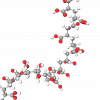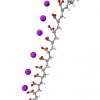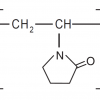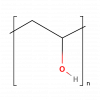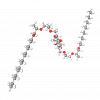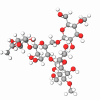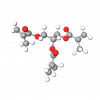

Acrylates/C10-30 Alkyl Acrylate Crosspolymer is a general name of cross-linked polymers of polyacrylic acid esterified with alkyl chains (length C10-30). They are universal, exceptionally easy-to-disperse polymers that offer the formulation flexibility of a multi-use rheological additive and a wide range of performance properties. They are used in various personal care applications, including gels, lotions, and creams.
Thanks to the exceptionally quick "wetting" property, Acrylates/C10-30 Alkyl Acrylate Crosspolymer requires much less time and effort to achieve a lump-free dispersion. In addition, since the unneutralized dispersion viscosity of this polymer is so low, concentrated dispersions can be made at levels much higher than previously possible.
It is specifically designed to make water dispersions less susceptible to lumping and easier to pump and handle, owing to its low dispersion viscosity before neutralization. It can also be used to form nanoparticles with enhanced stability, combining natural and synthetic polymers to deliver active ingredients.
In addition, Acrylates/C10-30 Alkyl Acrylate Crosspolymer is a thickener specifically designed for surfactant systems. It is used in a wide range of applications, including clear gels, hydro-alcoholic gels, lotions, and creams. It is a safe and widely used functional ingredient for personal care applications, with a rare sensitization profile, non-irritating to skin, and slightly irritating to the eyes.F.A.Q.
Is Acrylates/C10-30 Alkyl Acrylate Crosspolymer safe ingredient?
Skin irritation in vivo tests showed that Acrylates/C10-30 Alkyl Acrylate Crosspolymer is not irritant in skin care formulations. However, a study with extremally high concentrations showed that it could be a very slight irritant.
Direct eye contact
In vivo tests with direct eye contact produced slightly to moderate corneal irritation and conjunctival irritation which cleared by the study termination. Only slight iridal and conjunctival irritation was noted with the 1% solution, and all irritation was found to clear by 72 hours.
Self-life
Biological oxygen demand (BOD) tests results revealed that bacteria unable to break down Acrylates/C10-30 Alkyl Acrylate Crosspolymer (biological oxygen demand was zero), so it has excellent shelf-life in skin care formulations.