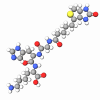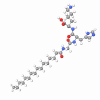
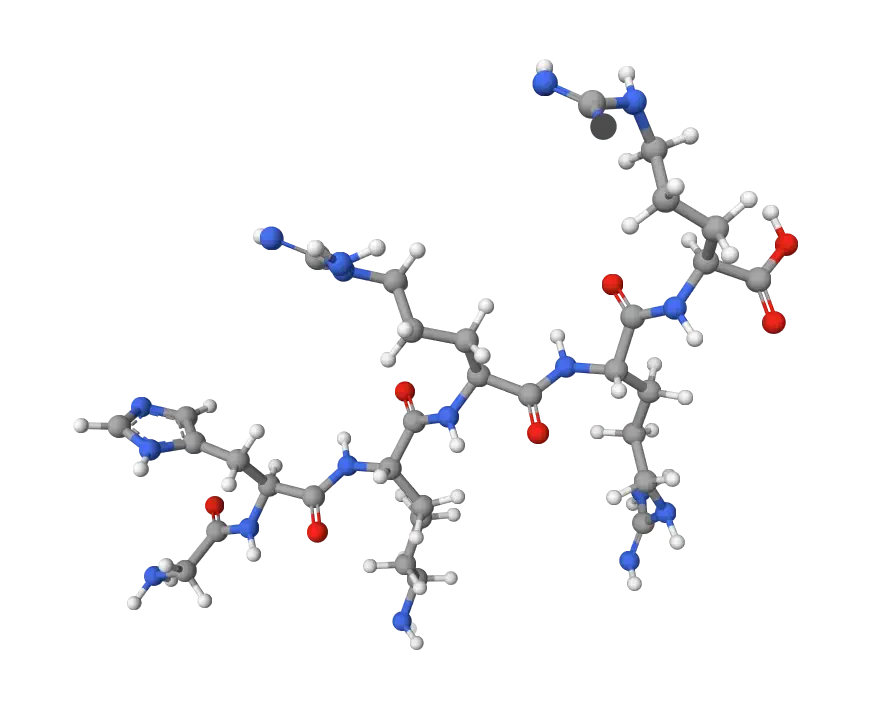
Heptapeptide-48 is a modified Tripeptide-1 (GHK) where the C terminus is conjugated to a tetra-arginine (Arg4) that helps to penetrate dermal cells. Its sequence is Gly-His-Lys-Arg-Arg-Arg-Arg, and it is known in the scientific literature as GHK-R4.
While the GHK tripeptide (Gly-His-Lys) is known for its copper-binding and collagen-stimulating properties, its high hydrophilicity often limits its ability to penetrate the cytoplasm efficiently. The Polyarginine-4 tail in Heptapeptide-48 enables delivery of the GHK motif, as Arginine-rich sequences are known as Cell-Penetrating Peptides (CPPs). Because arginine carries a strong positive charge at physiological pHs, it interacts with the negatively charged cell membranes, effectively acting as a "molecular tugboat" that pulls the peptide into the cell.
Manufacturer's studies showed that modification not only improves delivery, but it also significantly enhances the biological potency of the GHK motif at lower concentrations. They also claim that Heptapeptide-48 reduces UV-induced MMP activity and preserves the skin's structural proteins (collagen and elastin) from destruction.
According to the manufacturer's tests, Heptapeptide-48 inhibits UVB-induced MMP-2 activity at 1/10th the concentration required by standard GHK-acetate and significantly reduces MMP-9 expression at lower thresholds than the parent tripeptide. Moreover, it can restore soluble collagen, which is a key marker of "anti-wrinkle" efficacy,Safety tests on Heptapeptide-48 show "almost no cytotoxicity" at standard cosmetic levels; the lower IC30 compared to GHK-acetate confirms that increased penetration also increases biological activity, indicating that formulation concentrations must be precise.