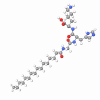
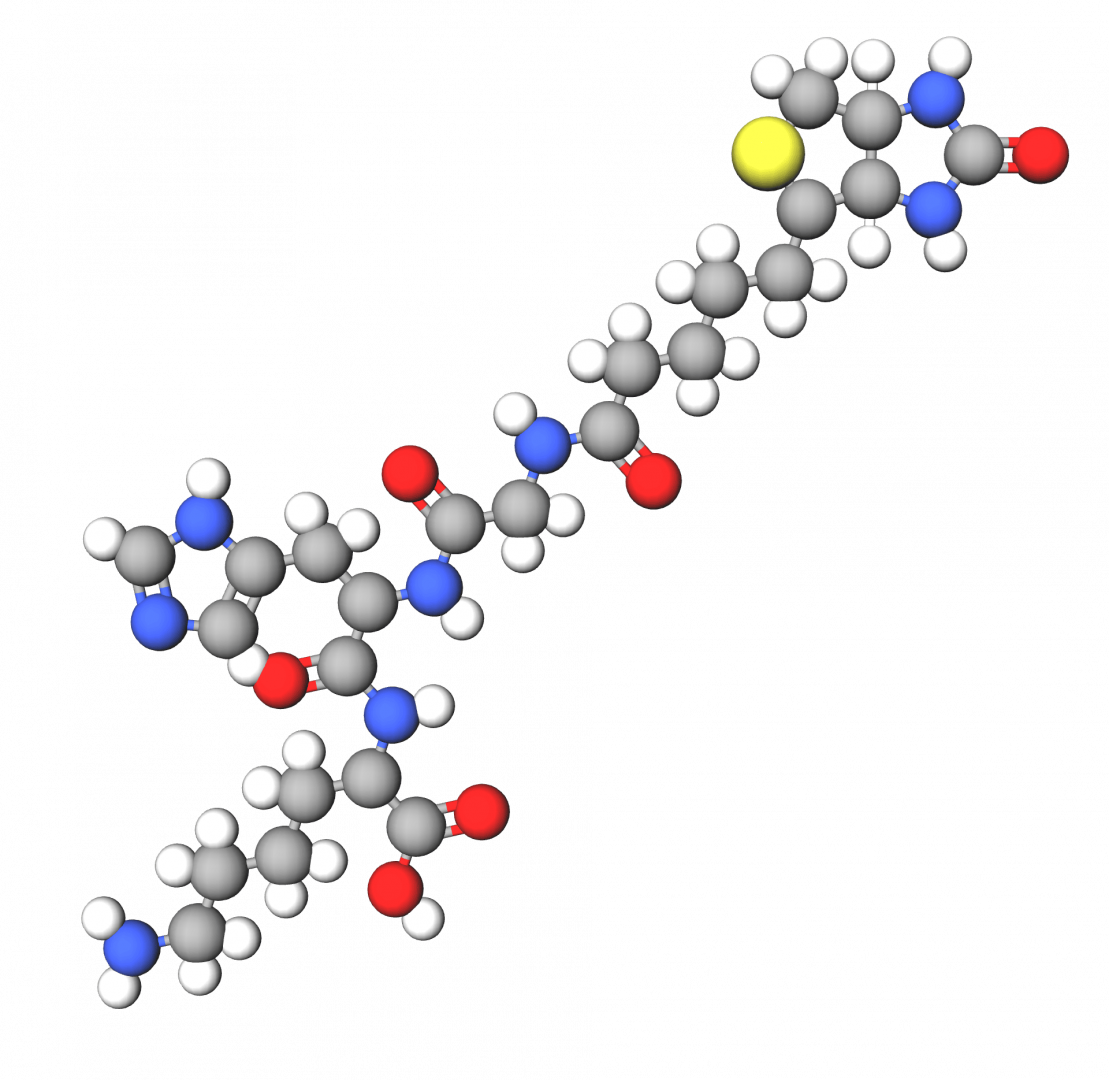
Biotinoyl Tripeptide-1 fights against premature hair loss. Hair follicles maintain their youth through the stimulation of cell communication and metabolism. Thanks to stimulating peptide that promotes anti-aging processes in the follicle, encouraging anchoring of molecules, supporting hair growth, and slowing down premature hair loss.
This vitaminized (Vitamin B7) tripeptide complex targets the leading causes of alopecia—a physical phenomenon that, in a lifetime, can affect the hair growth cycle in as many as 70% of Caucasian men and up to 50% of Caucasian women.
Biotinoyl Tripeptide-1 helps slow the aging effects by lessening harmful dihydrotestosterone (DHT) production, improving irrigation of the hair follicle, stimulating the production of anchoring molecules, and promoting hair growth much as 121%.
Ingredients
F.A.Q.
How does Biotinyl-GHK reduce hair loss?
Alopecia is mostly an aesthetic problem for men. Many causes have been advanced for explaining the onset of excessive hair loss. The most recent research focuses on mainly three underlying phenomena:
- High levels of testosterone, metabolized into Dihydrotestosterone (DHT) by the enzyme 5-a-reductase lead to reduced keratinocyte proliferation in the hair follicle, reducing the time the hair spends in the anagen phase and favoring its falling out during the telogen phase.
- Insufficient blood irrigation of the scalp also leads to hair loss, as nutrients, oxygen, and signal molecules are supplied below the needs of the rapidly multiplying keratinocytes.
- Lack of macromolecular synthesis (collagen IV, laminin 5, glycosaminoglycans) could explain the degradation of epithelial sheath structure with reduced anchoring strength of the hair in its dermal papilla.
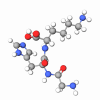
It has now been found that a matrikine Tripeptide-1, the peptide Gly-His-Lys, in particular, its biotinyl (Vitamin B7) derivative Biotinyl-GHK, showed targeted action, reducing the rate of hair loss in men. Cosmetic treatment product containing this ingredient has been tested in vitro and in clinical (in vivo) tests and shows morphological improvement of the hair follicle, the epithelial sheath, and the ratio of anagen to telogen percentages in human volunteers.
Attaching the biotinyl moiety to the matrikine peptide has two advantages:
- Biotin is a well-known vitamin the nutritional lack of which leads to rapid hair damage;
- It also confers substantivity to keratin, similar to its known affinity to streptavidin.
Laminin 5 and collagen IV staining with fluorescent antibodies were also carried out. The peptide-treated follicles maintained the laminin 5 and collagen IV layers' thickness over the period of observation, whereas the untreated hairs lost most of their structural proteins in these micrographs.
Gene activation studies (DNA array) were initiated, which indicated intense stimulation of many hair growth and hair anchoring mechanisms.
Adhesion complex proteins (vimentin, desmoglein, fibronectin receptor, laminin-binding protein, and anti-inflammatory and cell proliferation regulating proteins are upregulated by more than 30 and up to 90% over baseline.
Advantageously it may be combined for this anti-hair-loss effect with any other active skincare ingredient such as Red clover extract, Biochanin A, Acetyl tetrapeptide-3, and Capixyl™.