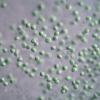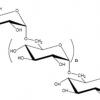
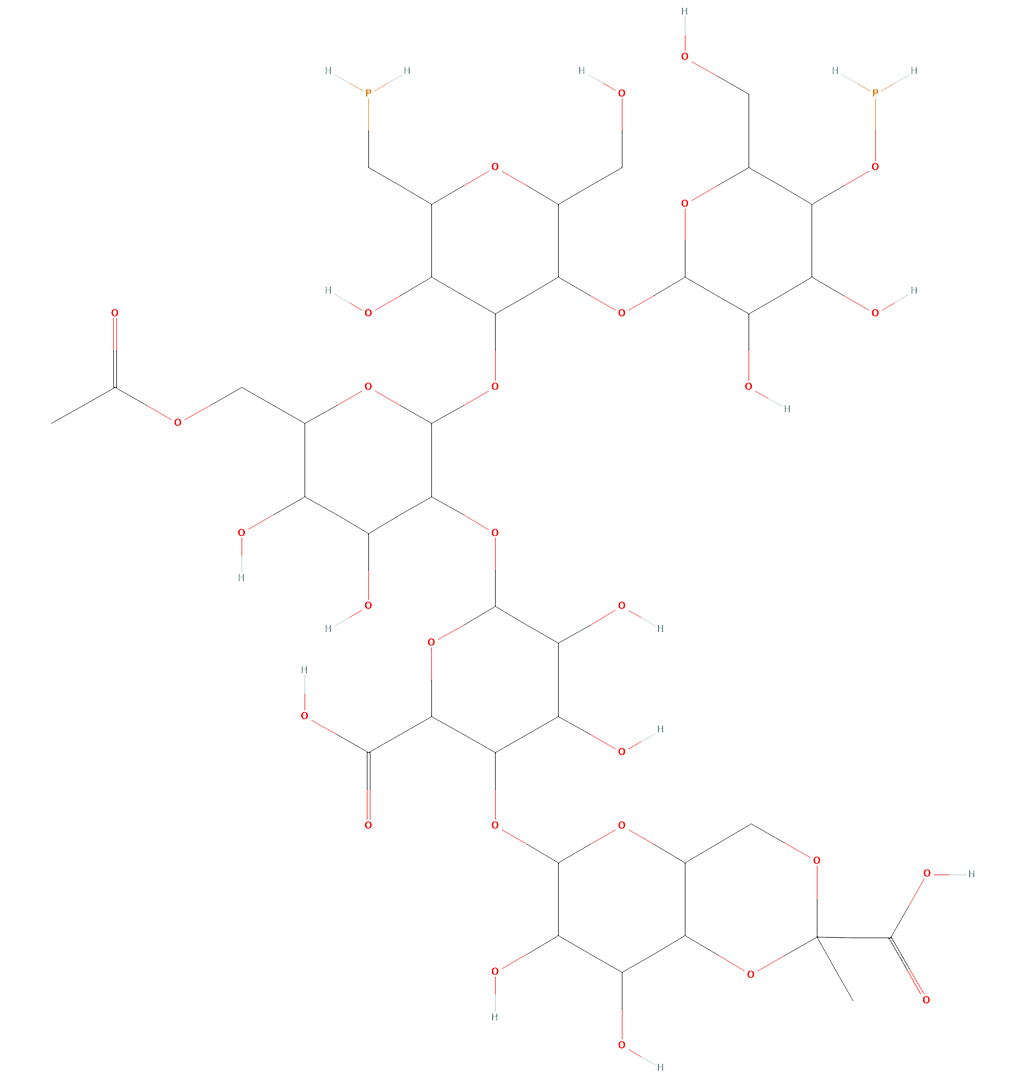
An important discovery made by Allene Rosalind Jeanes and her team in the early 1960s was xanthan gum, a polysaccharide synthesized by the bacteria Xanthomonas Compestris. Xanthan gum is used for thickening ice cream, other foods, pharmaceuticals, and skincare products. In addition, it is used in the food industry to keep products like oil and vinegar from separating; thus, it's a well-studied, known, and safe ingredient for skincare formulas.
If you shake a bottle of salad dressing, the oil and vinegar will appear to mix, but the oil does not dissolve into the vinegar. In time, the two substances will separate again. But with xanthan gum added, the oil and vinegar will stay together long enough to get from bottle to plate. Xanthan gum is found in everyday products, from ketchup and steak sauces to cough syrups and skin lotions. The petroleum industry uses enormous quantities of xanthan gum to thicken the drilling mud that carries solid materials to the surface.
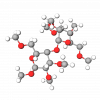
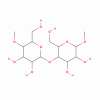
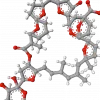
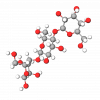
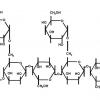
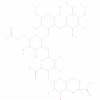
A natural carbohydrate polymer, Xanthan gum, is produced by a yeast-like microorganism whose structure has helical conformation and contains glucose, mannose, and glucuronic acid units in a 2:2:1 ratio combined with acetyl and pyruvyl groups. Its molecular structure provides unique pseudoplastic rheological properties, synergism with other polysaccharides, and thermal stability. In personal care applications, it exhibits anti-inflammatory and soothing properties and is used as an emulsifier and thickener to help with the consistency and stability of creams.
Xanthan gum is an acid-stable, heat-resistant, salt-tolerant heteropolysaccharide (relative of glucomannans) obtained as a versatile biosynthetic ingredient. It forms stable hydrogels and is recommended for water-based applications with a pH range of 2 to 10. Combined with other mananas (galactomannans and glucomannans) like a guar gum, its aqueous solution yields a smoother texture and a more efficient thickening. Xanthan gum maintains its viscosity as temperature increases and synergizes with locust bean gum. Those combinations help to form a nanoemulsion that acts as a delivery vehicle, enabling controlled release of active ingredients.