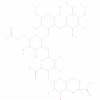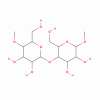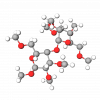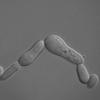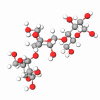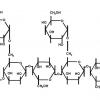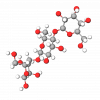
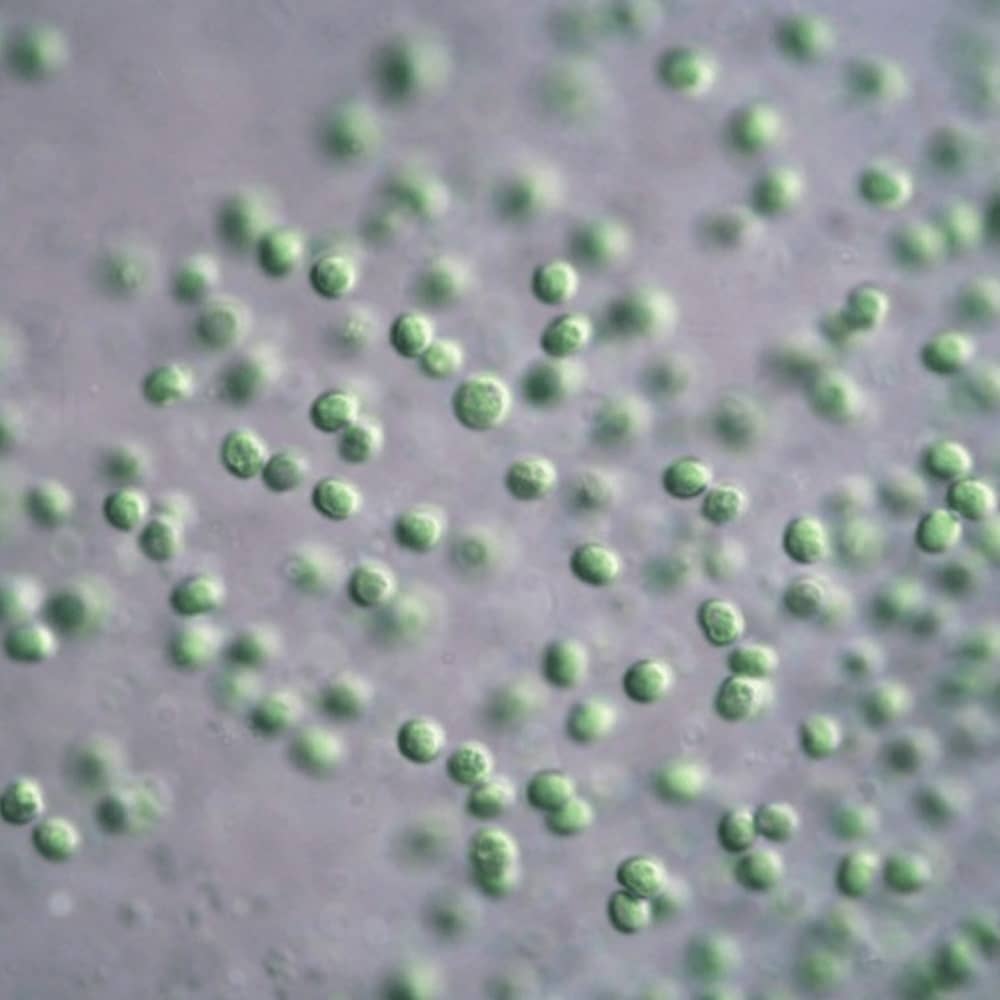
Aphanothece Sacrum Exopolysaccharides (called Sacran) are high-molecular-weight polysaccharides with high water-binding capacity derived from the freshwater cyanobacterium Aphanothece sacrum. Traditionally consumed as food in Japan, Sacran has more recently attracted attention in biomedical and cosmetic industries. Thanks to its unique molecular structure, in which multiple sugar units containing sulfate and carboxyl groups attract water molecules, it provides an elastic, gel-like, film-forming consistency that can carry active ingredients and is useful for topical and oral care applications.
When applied to the skin, Aphanothece Sacrum Exopolysaccharides creates a protective barrier that reduces transepidermal water loss and shields against environmental damaging factors. This artificial barrier not only maintains hydration but also supports keratinocyte differentiation, thereby improving epidermal barrier function. When combined with polyols such as 1,3-butanediol, it forms hydrogels that improve the sensory profile of the formulation.
Sacran also exhibits anti-inflammatory activity, as demonstrated in models of atopic dermatitis and tape-stripping injury, in which it reduced pain, erythema, and IgE-mediated immune responses. Compared with conventional polymers such as hyaluronic acid, it has shown superior efficacy in alleviating skin irritation and promoting wound healing.
Incorporated into oral care applications, Sacrum Exopolysaccharides protects mucosal surfaces. Its ability to form a viscoelastic film suggests potential in soothing oral lesions, reducing irritation from mechanical or chemical stimuli, and maintaining moisture in the oral cavity. Moreover, Sacran’s anti-inflammatory effects, comparable to those of pharmaceutical agents in gastric ulcer models, highlight its potential to mitigate mucosal inflammation and support tissue repair.Aphanothece Sacrum Exopolysaccharides is a natural, effective, highly hypoallergenic, and biodegradable ingredient for personal care applications. It is historically integrated into traditional diets, biocompatible, and safe for topical and oral use. Unlike synthetic polymers, it combines functional performance with a good safety profile, minimizing risks of cytotoxicity or allergenicity.