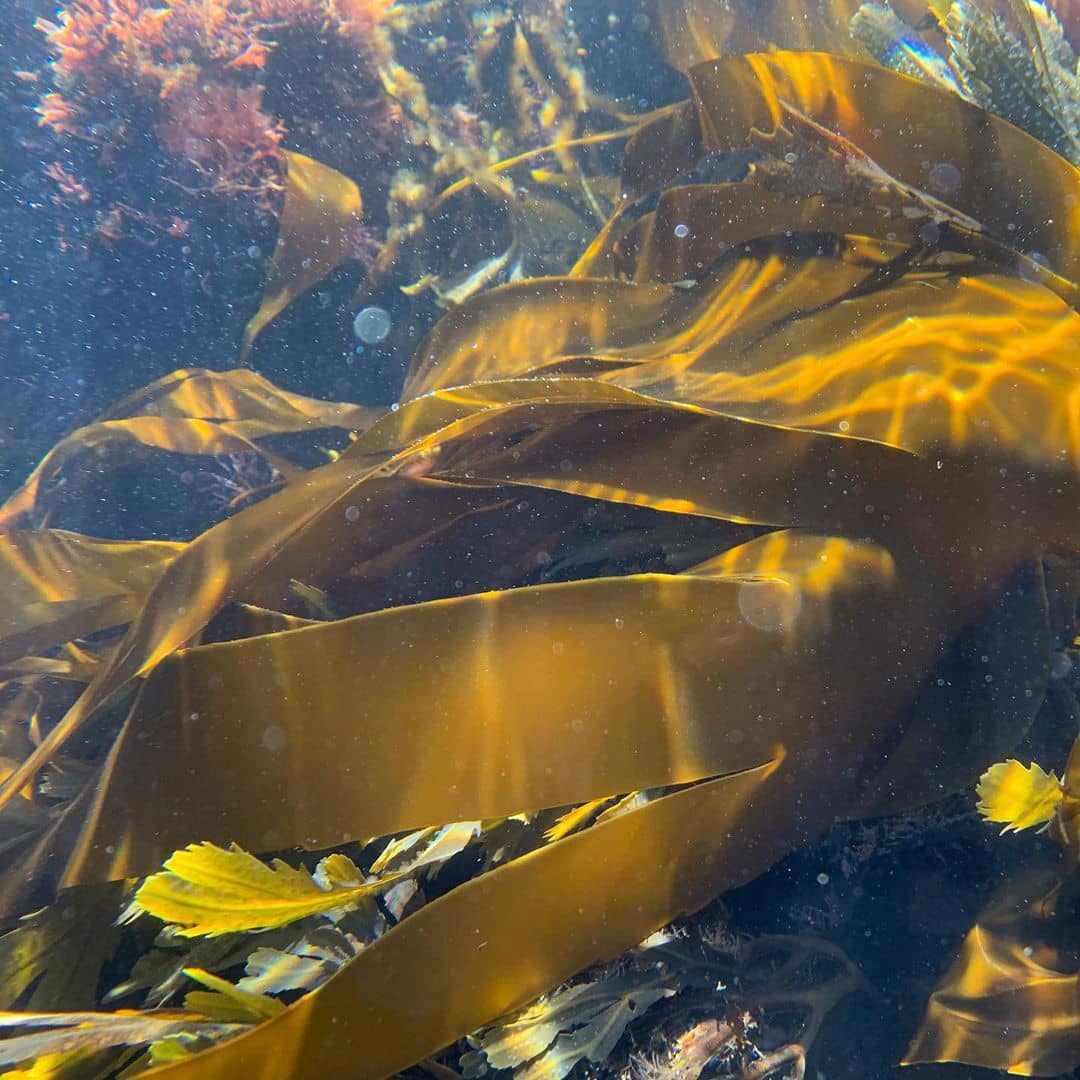
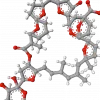
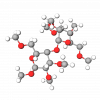
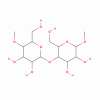
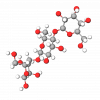
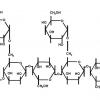
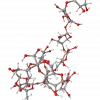
Propylene Glycol Alginate (PGA) is a general name of 1,2-propane-diol esters with alginic acid (algin), usually obtained from Laminaria or Macrocystis species of brown seaweeds after a series of purification steps. PGAs are common food additives, marked as E405, with emulsifying, thickening, and gel-forming properties.
Esterification with propylene glycol improves algin properties, making it a universal ingredient for hydrocolloid systems. It allows formulators to achieve stable emulsions, gels, and film-forming applications. It also enables the formation of nanoparticles and forms complexes with various active ingredients, playing a crucial role in delivery systems.
The surface activity, rheological properties, and gelling potential of different Propylene Glycol Alginates depend on the degree of esterification. Changing the ion balance or adding urea to PGA-based systems can also help control the formulation's physical and sensory properties.
Combined with other polysaccharides like Xanthan gum, Propylene Glycol Alginate from more stable emulsions enables the loading of pure soluble ingredients like Calcium carbonate or hydrophobic carotenoids like Lutein. It also helps to solubilize proteins from gels in aqueous media.
A comprehensive review of propylene glycol alginate in the food industry: Synthesis, safety, composite hydrocolloids and application
Author(s):
Ma Mengjie, Liu Yueyue, Zhang Shuaizhong, Yuan Yongkai
DOI:
10.1016/j.tifs.2025.104900
The presence of propylene glycol alginate increased the stability and intestine-targeted delivery potential of carboxymethyl starch-stabilized emulsions
Author(s):
Wang L, Wei Z, Xue C
PMID:
35761643
DOI:
10.1016/j.foodres.2022.111387
pH-driven self-assembly of alcohol-free curcumin-loaded propylene glycol alginate nanoparticles
Author(s):
Yuan Y, Ma M, Zhang S, Wang D, Xu Y
PMID:
34920055
DOI:
10.1016/j.ijbiomac.2021.12.025
Propylene glycol alginate-based film activated by Spirulina (Arthrospira platensis) powder: Physicochemical, microstructural, and functional properties
Author(s):
Li L, Zhao Y, Molaveisi M, Shi Q
PMID:
41213372
DOI:
10.1016/j.ijbiomac.2025.148845
Propylene glycol alginate (PGA) gelled foams: A systematic study of surface activity and gelling properties as a function of degree of esterification
Author(s):
Nilsen-Nygaard Julie, Hattrem Magnus N., Draget Kurt I.
DOI:
10.1016/j.foodhyd.2016.01.011
CaCO3 loaded lipid microspheres prepared by the solid-in-oil-in-water emulsions technique with propylene glycol alginate and xanthan gum
Author(s):
Li G, Zhao Y, Zhang J, Hao J, Xu D, Cao Y
PMID:
36071930
DOI:
10.3389/fnut.2022.961326
Stability of lutein in O/W emulsion prepared using xanthan and propylene glycol alginate
Cellulose derivatives have the polymeric backbone of cellulose, with repeating anhydroglucose units. After alkaline treatment, cellulose is reacted with methyl chloride to yield methyl ether groups.
Cellulose is the primary component of green plants. It is an organic polysaccharide (complex carbohydrate) derived from beta-glucose and is used in conjunction with a marine focus as a natural exfoliating agent.
Xanthan gum is a natural carbohydrate gum produced by a yeast-like micro-organism. It has soothing properties and is used as an emulsifier and thickener to help with the consistency and stability of creams.
Agar is a galactose sulfate polymer obtained from red seaweeds like Gracilaria and Gelidium and forms heat-stable, strong gels at concentrations less than 0.5%.
Hydroxypropyl Methylcellulose is a water-soluble polymer offering a broad range of properties. It is a multifunctional cellulose-based thickening agent - for improved foam quality.
Dextrin is a general term for degraded starch polysaccharides in which the amylose and amylopectin present in the original starch have been partially hydrolyzed at the 1,4αD and 1,6αD linkages.
Dehydroxanthan Gum is a dehydrated xanthan gum, an anionic polymer, supplied as an off-white powder. In personal care applications, it is used as a fixative, thickener, gelling agent, and for styling aid.
Ceratonia Siliqua (Locust Bean) Gum is a highly purified fraction of branched galactomannan saccharide polymers with a mannose-to-galactose ratio of 4:1. It is derived from the seeds of the legume tree Ceratonia siliqua.
Galactomannans from Caesalpinia Spinosa, in particular, have a 3:1 mannose:galactose ratio (Man:Gal) and relatively regular distribution of galactose along the main chain.
Guar gum is a plant polysaccharide obtained from the shrub's seeds, Cyamopsis Tetragonoloba, which, like the soybean, belongs to the Family Leguminoseae.