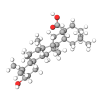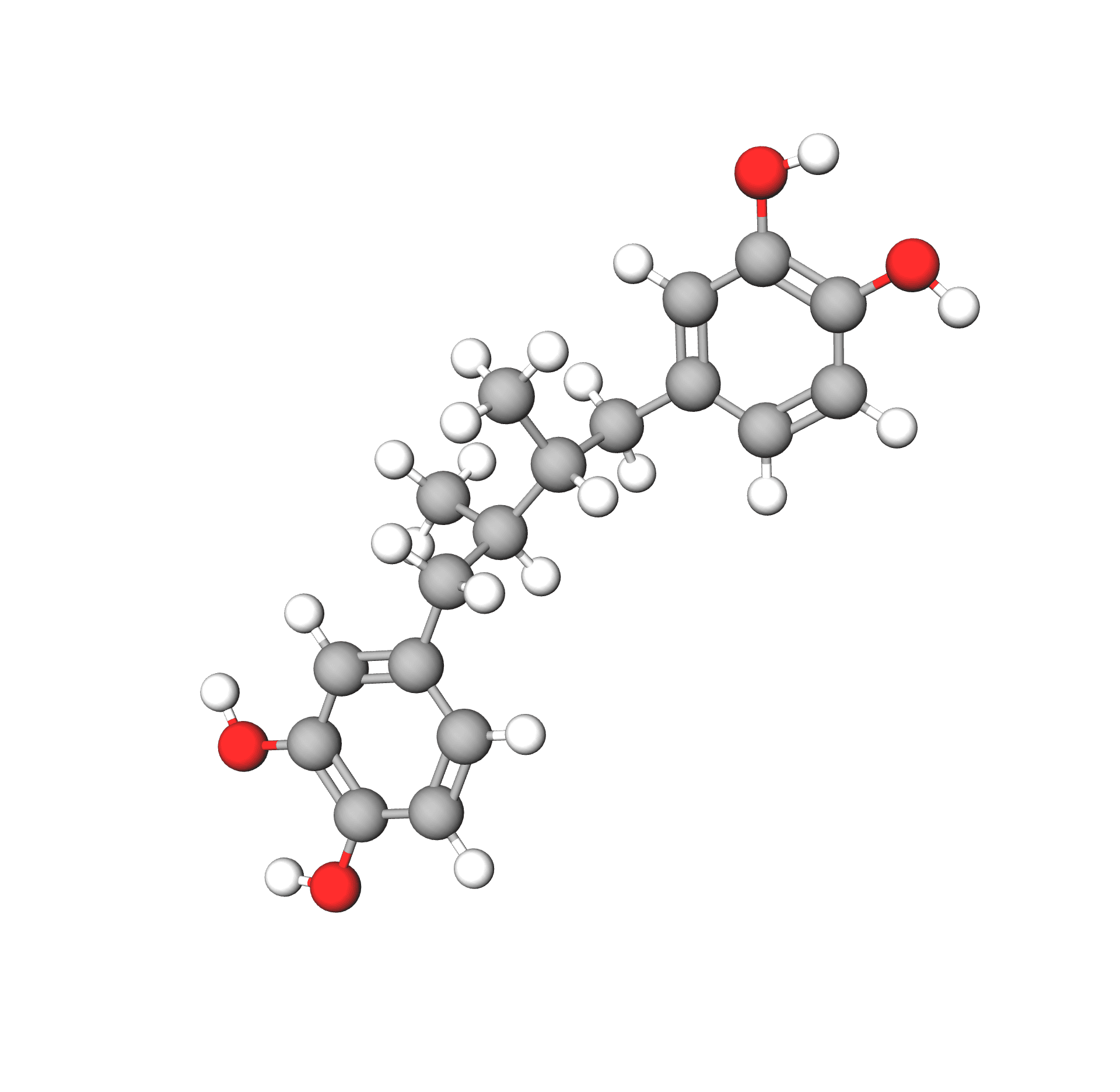
Nordihydroguaiaretic Acid (NDGA; known under the trade name VINTOX) is a crystalline, structurally biphenolic, lipophilic compound soluble in ethanol, methanol, and oils. It occurs naturally in many plant resins and has been used in the traditional medicine of Native Americans and Mexicans for centuries1.
NDGA is traditionally extracted from Larrea divaricata and has long been used as a natural antioxidant and carcinogen inhibitor derived from renewable sources2. However, it can be produced by controlled chemical synthesis to ensure consistent purity, performance, and supply.
Recent studies of Nordihydroguaiaretic Acid have shown its biological properties as a free-radical scavenger and a protective agent against UV-induced keratosis3. Topical application activated the skin's natural defense mechanisms, restoring reduced glutathione levels and activating antioxidant enzymes1.
According to the manufacturer, it is 10-100 times more effective than vitamin E, vitamin C, or grape seed polyphenols. It is also more stable and more effective than green tea polyphenols. Combined with other antioxidants such as tocopherol, ascorbic acid, or citric acid, Nordihydroguaiaretic Acid provides comprehensive antioxidant protection, with use levels in skin care applications ranging from 0.001% to 0.01%At relatively high concentrations (up to 0.1%), Nordihydroguaiaretic Acid exhibits anti-inflammatory, barrier-recovery, and photoprotective properties. By inhibiting the PAR2-mediated signaling pathway (acting as a PAR2 antagonist), it supports skin barrier recovery in atopic dermatitis4. Another study reported antimicrobial activity, activating antibiotics against initially antibiotic-resistant bacterial strains5.
Nordihydroguaiaretic Acid is stable and compatible with ingredients (including anionic, nonionic, or cationic formulations) commonly used in personal care products within a pH range of 4.5-7. It is a well-studied, natural, and safe (for topical application) ingredient for personal care applications6.
References
- Nordihydroguaiaretic Acid from Creosote Bush (Larrea tridentata) Mitigates 12-O-Tetradecanoylphorbol-13-Acetate-Induced Inflammatory and Oxidative Stress Responses of Tumor Promotion Cascade in Mouse Skin.PMID:19861506DOI:PMC3138708
- Antimutagenic and antitumorigenic activities of nordihydroguaiaretic acid.PMID:1719406DOI:10.1016/0165-1218(91)90062-q
- Nordihydroguaiaretic acid-mediated inhibition of ultraviolet B-induced activator protein-1 activation in human keratinocytes.PMID:12112316DOI:10.1002/mc.10052
- Impact on inflammation and recovery of skin barrier by nordihydroguaiaretic Acid as a protease-activated receptor 2 antagonist.PMID:24009835DOI:PMC3762283
- Nordihydroguaiaretic acid enhances the activities of aminoglycosides against methicillin- sensitive and resistant Staphylococcus aureus in vitro and in vivo.PMID:26579101DOI:PMC4621280
- Nordihydroguaiaretic Acid in Therapeutics: Beneficial to Toxicity Profiles and the Search for its AnalogsDOI:10.2174/1568009619666191022141547