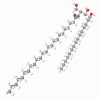
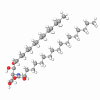
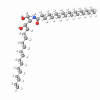
Human Adipocyte Conditioned Media Extract obtained from adipose-derived stem cells is a cocktail containing growth factors, extracellular matrix components, and physiologically active substances. It is also known under the trade name ADSC-CM.
Conditioned medium from Adipose-derived Stem Cells (ADSC-CM) stimulates collagen synthesis and fibroblast migration. In addition, it promotes fibroblast transformation to myofibroblasts (more active differentiated forms) independent of TGF-β. As a result, it accelerates wound healing, skin regeneration, and renewal. Thanks to its transforming growth factor beta 1 (TGFβ-1) content, it also leaves a noticeable skin-whitening effect, inhibiting tyrosinase activity and decreasing melanin production.
Human Adipocyte Conditioned Media Extract is produced using sterile freeze-dried technology. ADSC-CM powder is produced in accordance with the strict KFDA stem cell regulations and guidelines.
Human Adipocyte-Conditioned Media Extract is available in powder form and contains several important cell growth factors, including EGF, FGF-β, and TGF-β. ADSC-CM is a valuable, innovative ingredient for advanced anti-aging applications that rejuvenate, refresh, and smooth the skin.
Thanks to its high concentration of cytokines and growth factors, Human Adipocyte Conditioned Media Extract promotes regenerative processes in the hair follicle, effectively combating androgenetic alopecia. Clinical trials showed that a hair care preparation containing ADSC-CM increased hair quantity and density compared with the placebo group. It was also tested for the treatment of pressure ulcers, with promising results.
Synonyms
ADSC-CM
Changed
References
Human Adipocyte Conditioned Medium Promotes In Vitro Fibroblast Conversion to Myofibroblasts
Author(s):
Mariam Y El-Hattab, Yoshiaki Nagumo, Francoise A Gourronc, Aloysius J Klingelhutz, James A Ankrum, Edward A Sander
PMID:
32581231
DOI:
10.1038/s41598-020-67175-3
The Effect of Conditioned Media From Human Adipocyte-Derived Mesenchymal Stem Cells on Androgenetic Alopecia After Nonablative Fractional Laser Treatment
Author(s):
Young In Lee, Jihee Kim, Jemin Kim, Sujin Park, Ju Hee Lee
PMID:
32769526
DOI:
10.1097/DSS.0000000000002518
Efficacy of combined treatment with human adipose tissue stem cell‐derived exosome‐containing solution and microneedling for facial skin aging: A 12‐week prospective, randomized, split‐face study
Author(s):
Park Gyeong‐Hun, Kwon Hyuck Hoon, Seok Joon, Yang Steven Hoseong, Lee Joon, Park Byung Chul, Shin Eun, Park Kui Young
DOI:
10.1111/jocd.15872
Hypoxic ADSC-CM-Loaded Separable Bilayer Micropatterned Dressing Improved Diabetic Wound Healing via Tissue Integration and Immune Modulation
Author(s):
Huang J, Liang K, Wang Z, Lin Z, Liu J, Li N, Li Y
PMID:
40539763
DOI:
10.1021/acsami.5c05220
The Basic Mechanism of Hair Growth Stimulation by Adipose-derived Stem Cells and Their Secretory Factors
Author(s):
Won CH, Park GH, Wu X, Tran TN, Park KY, Park BS, Kim DY, Kwon O, Kim KH
PMID:
28875863
DOI:
10.2174/1574888X12666170829161058
Therapeutic Potential of Adipose-Derived Stem Cells and Their Secretome in Reversible Alopecias: A Systematic Review
Author(s):
Ortega-Cuartiella A
PMID:
39170092
DOI:
10.4103/ijt.ijt_3_21
Therapeutic applications of adipose cell-free derivatives: a review
Author(s):
Cai Y, Li J, Jia C, He Y, Deng C
PMID:
32698868
DOI:
10.1186/s13287-020-01831-3
Topical hADSCs-HA Gel Promotes Skin Regeneration and Angiogenesis in Pressure Ulcers by Paracrine Activating PPARβ/δ Pathway
Author(s):
Jin C, Zhao R, Hu W, Wu X, Zhou L, Shan L, Wu H
PMID:
39478872
DOI:
10.2147/DDDT.S474628
Whitening Effect of Adipose-Derived Stem Cells: A Critical Role of TGF-BETA.1
Author(s):
Kim Won-Serk, Park So-Hyun, Ahn Se-Jin, Kim Hyung-Ki, Park Jeong-Soo, Lee Ga-Young, Kim Kea-Jeung, Whang Kyu-Kwang, Kang Seung-Hee, Park Byung-Soon, Sung Jong-Hyuk
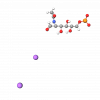
Disodium Acetyl Glucosamine Phosphate (N-acetyl-glucosamine-6-phosphate) is a biotechnological ingredient derived by enzymatic phosphorylation of natural N-acetyl-glucosamine.
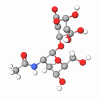
Sodium Hyaluronate is the sodium salt form of Hyaluronic Acid (HA). It has been used in cosmetics and skincare products for moisturization and wound healing.
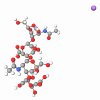
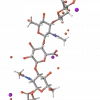
The MDI Complex™ is a natural matrix metalloprotease inhibitor. It contains glycosaminoglycans and helps control the appearance of signs of aging and maintain youthful-looking skin.
SK-influx® is a skin-identical lipid (ceramide) complex ingredient that restores the skin's protective barrier function. It is a concentrated formulation consisting of a multi-lamellar (membrane) system resembling the structure of the lipid barrier in the Stratum Corneum.
Ceramide II (NG), also known as N-stearoylsphinganine or Ceramide 2, is similar to dermal cells' membrane molecules. It renews the skin't lipid layer, reduces transdermal moisture loss, and improves water-binding ability.
Disodium Acetyl Glucosamine Phosphate with Glucose may be an external source of building blocks (precursors) for HA synthesis stimulating the process. The dermal cell won't spend energy on the synthesis of precursors, instead of that it'll join blocks and produce Hyaluronic acid.
It can improve both hair manageability and skin smoothness. In addition, hydrolyzed collagen has unique water-binding and texturizing properties, which enable it to bind to the water held by the hair shaft.