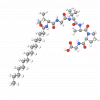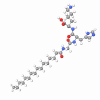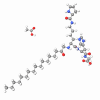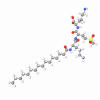
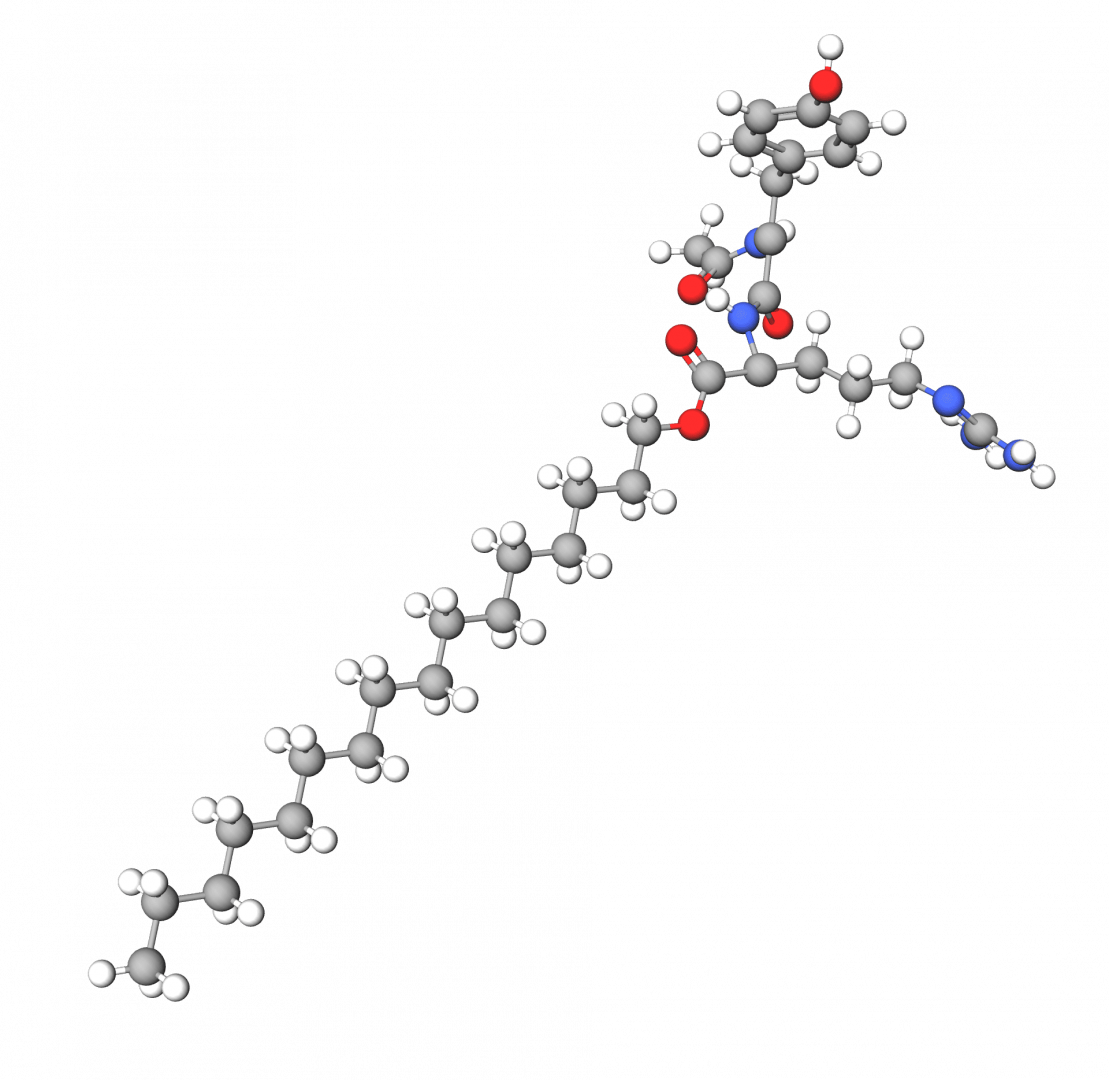
Acetyl Dipeptide-1 Cetyl Ester (Lipo-dipeptide Tyr-Arg, with the sequence N-Acetyl-Tyrosyl-Arginyl-Hexadecyl Ester or NATAH) is an active lipopeptide developed by Sederma known under the trade name Idealift™.
This lipopeptide shows strong stimulatory effects on elastin production. As a result, Acetyl Dipeptide-1 Cetyl Ester helps combat cutaneous sagging. It reduces the visible effects of gravity on the skin, helping to accentuate flaccid jowls caused by aging or daily aggressors.
The efficacy of Lipo-dipeptide Tyr-Arg was demonstrated in vitro by measuring elastin synthesis and elastin fiber architecture. The quantity of elastin/tropoelastin settled in the extracellular matrix after release from the fibroblasts increased by more than 94%.
Idealift™ has also been shown to intervene in the various stages of elastic tissue formation and maturation. Elastic tissue consists of elastin and multiple proteins that act as guides, enabling anchoring and stabilization; enzymes are also necessary for development (Fibrillin-1, fibulin-5, and lysyl oxidase in particular).Tests were conducted on 26 female volunteers aged 54 to 75 with sagging skin. Women applied a cream containing 4% Acetyl Dipeptide-1 Cetyl Ester twice daily for 2 months. The effects of this new active ingredient were proven after just one month. They were confirmed using various evaluation techniques (Aeroflexmeter®, a new device developed and patented by Sederma, FOITS, and self-evaluation). As a result, the visible effects of gravity decreased, cutaneous sagging was reduced, and for 80% of panelists, their skin was firmer.
This is an ideal ingredient for formulas against skin sagging that also improve resistance to gravity and firmness, helping women look younger.
Mechanism of action
Molecules that mediate events and activities in our organism fall into several classes of chemical nature: steroids, amines, peptides, and sundry other substances. Peptides appear to play a vital role in modulating neural activity and signaling; neurotensin, substance P, enkephalin, and endorphin are just a few that have been identified in this field.
The dipeptide NATAH (Acetyl Dipeptide-1 Cetyl Ester) was developed based on the discovery that the dipeptide Tyr-Arg naturally exists in the body: its neuronal activity, via stimulation of nerve cell release of met-enkephalin, an opioid neuromediator with analgesic activity, has been demonstrated. The chemical modification (N-acetylation and O-hexadecyl-esterification) is necessary to ensure sufficient skin penetration and bioavailability.
Previous clinical trials have shown that the peptide possesses analgesic activity when applied topically to the skin: heat sensation, chemical stinging, and mechanical aggression are felt less strongly after using the peptide incorporated in cosmetic preparations. The present disclosure teaches that the mechanism of this analgesic potency appears to be the release of enkephalin precursors in the skin; furthermore, it was discovered that the peptide also has muscle-relaxant activity.
Other studies
In comparative tests with capsaicin-induced stinging and burning sensation, 4-t-butylcyclohexanol was compared with Acetyl Dipeptide-1 Cetyl Ester. Both preparations were adequate against capsaicin-induced stinging. Preparation with 4-t-butylcyclohexanol was faster because it directly blocks the TRPV1 receptor, which plays a significant role in skin hypersensitivity.Another study showed that Acetyl Dipeptide-1 Cetyl Ester has antioxidant and antiglycation effects and can be used as an anti-aging agent. Moreover, it regulates proteins released after UVA-induced damage, activating autophagy and exerting an anti-senescence impact at the cellular level.