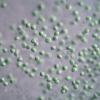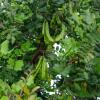
The discovery of Rhizobian gum stems from agronomic research and the study of soil microorganisms living in symbiosis with plants. A specific microorganism identified as a Rhizobium bacterium lives in contact with the roots of sunflowers. Hosted by the roots, this symbiotic bacterium is gram-negative, catalase-negative, and oxidase-positive. At the time of drought, the polymer synthesized by the bacterium forms a film around the root. Rhizobian gum stocks water in small amounts in the soil, making it available for root absorption and allowing the plant to survive despite extreme climatic conditions. The biopolymer also has an important role in maintaining the soil structure.
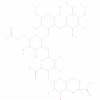
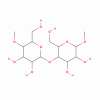
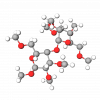
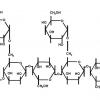
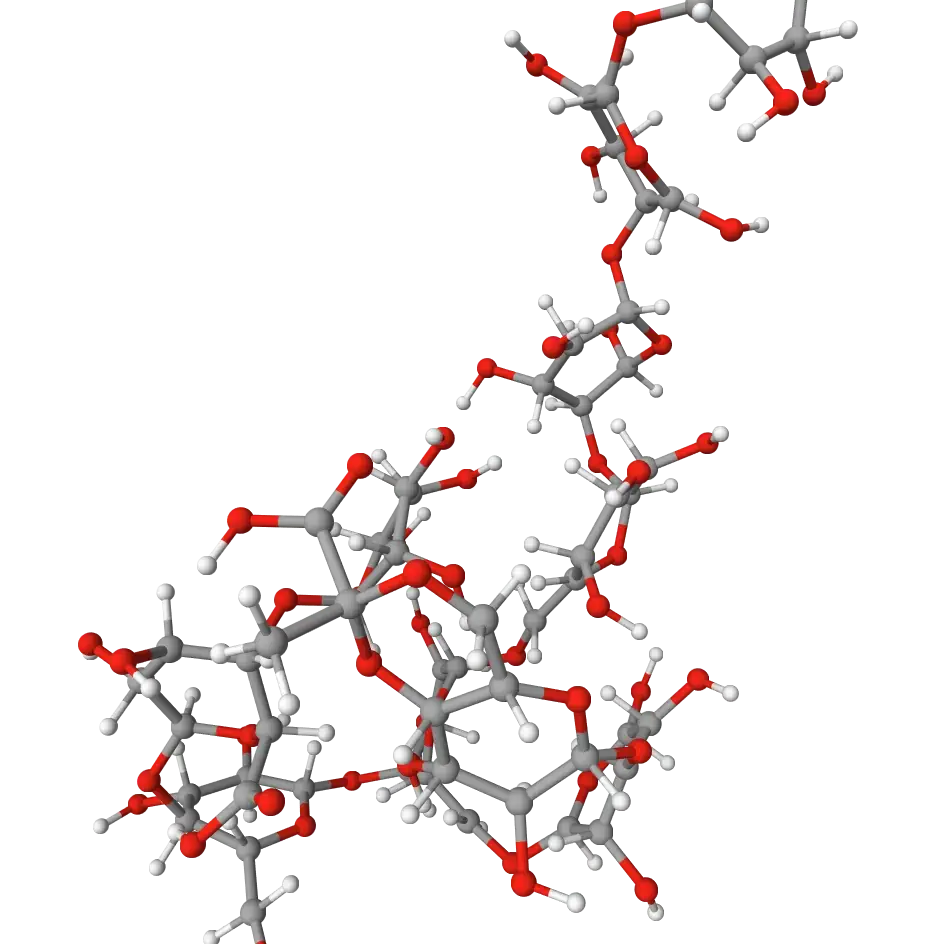
As Rhizobian gum acts as a natural water exchanger with an extraordinary moisture-binding capacity, it has interesting properties for cosmetic applications. Chemically, Rhizobian gum is a branched polymer in which repeating triplets of glucose and galactose polysaccharide units alternate with glucuronic acid, a pyruvate group, and acetyl groups.
During fermentation, the Rhizobium bacterium consumes glucose in solution and produces Rhizobian gum. The yield of glucose conversion to Rhizobian gum is about 50%. In its native form, it exhibits the characteristics of a viscous polysaccharide; after heat treatment, it acquires gel properties. The melting point of Rhizobian gum is close to 60°C, but it gets lower after sterilization. It can be close to body temperature. Depending on temperature and concentration, the gel can shift between dissociated flexible chains and partially organized chains with junction zones. The last conformation has a higher affinity toward the water.
Rhizobian Gum improves the sensory properties of cosmetic formulations. It enhances the brightness of emulsions and leaves a moisturizing, silky film on the skin. Thanks to the particular properties of its gel, it exhibits outstanding self-cooling. It is caused by the evaporation of water released during application. This can be used to formulate mild cooling formulations, such as eye contour serums. The efficacy of Rhizobian gum patches for dark circles has been proven through clinical trials.