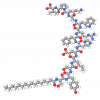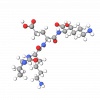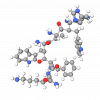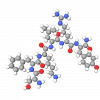
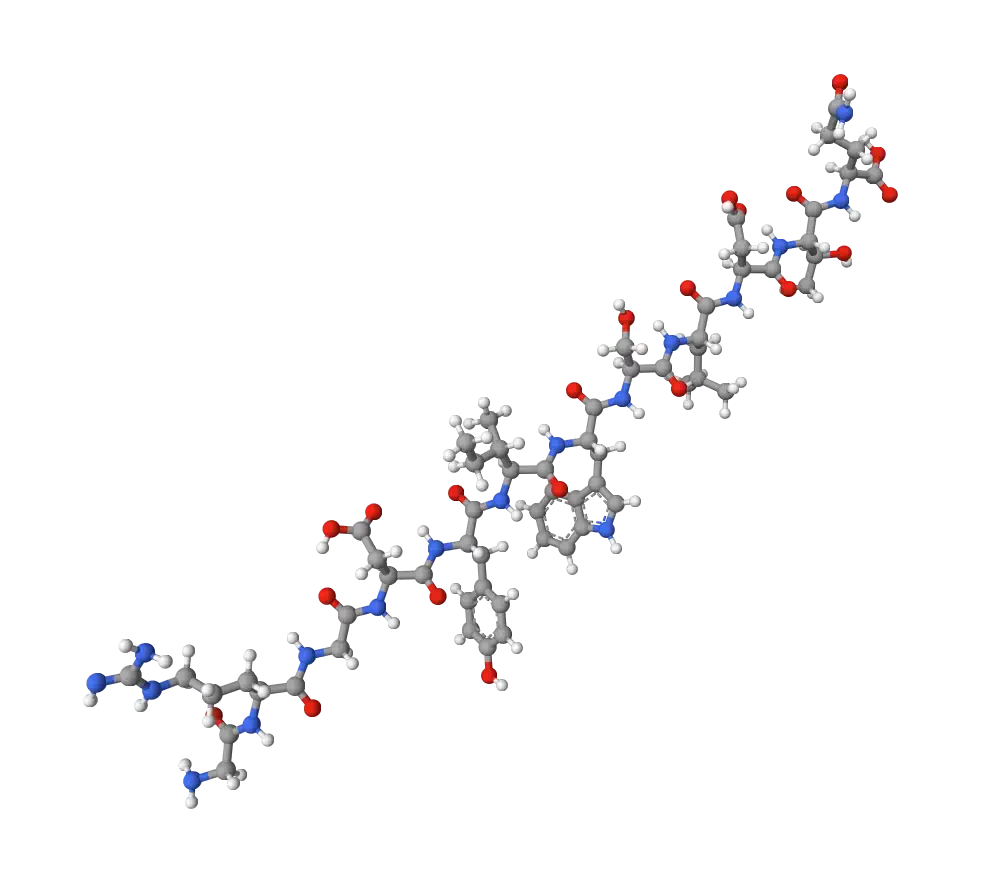
Oligopeptide-68 is a dodecapeptide with a Gly-Arg-Gly-Asp-Tyr-Ile-Trp-Ser-Leu-Asp-Thr-Gln sequence, the main active ingredient in β-WHITE™ complex. It is a signal peptide that interacts with MITF (microphthalmia-associated transcription factor), inhibiting melanocyte differentiation and development.
Oligopeptide-68 reduces tyrosinase activity, thereby reducing melanin production and producing a skin-whitening effect. It is effective in skin discoloration related to hyperpigmentation, including dark and aging spots, and leasma. Several studies have shown that it's more effective than hydroquinone, with fewer side effects.
A comparative clinical study of 40 volunteers with hydroquinone (HQ) and Oligopeptide-68 combined with DAB was evaluated at weeks 6 and 12 following controlled radiation exposure. Of the initial cohort, 38 participants completed the study. Among those treated with the peptide-containing formulation, skin whitening effects were rated as significant in 2.6% of subjects, moderate in 76.3%, and slight in 21.1%. These outcomes were superior to those observed in subjects treated with HQ-based creams at 2% and 4% concentrations.
In another study, a combination of Oligopeptide-68 with exfoliating agents showed notable immediate improvement in melasma. That was demonstrated at the cellular level and through clinical observation that didn't reveal adverse effects.Oligopeptide-68 is a safe and effective signaling peptide for skin whitening applications, especially for skin affected by melasma. Usage concentrations are usually 1.0–2.5%.
We sincerely apologize for the error previously published on our website regarding the amino acid sequence of Oligopeptide-68. The sequence listed as
Arg-Asp-Gly-Gln-Ile-Leu-Ser-Thr-Trp-Tyrwas incorrect.Accuracy and transparency are central to our commitment, and we regret any confusion this may have caused. We have corrected the information to ensure that our content remains reliable and trustworthy.