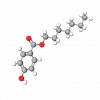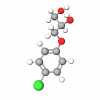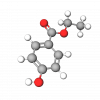
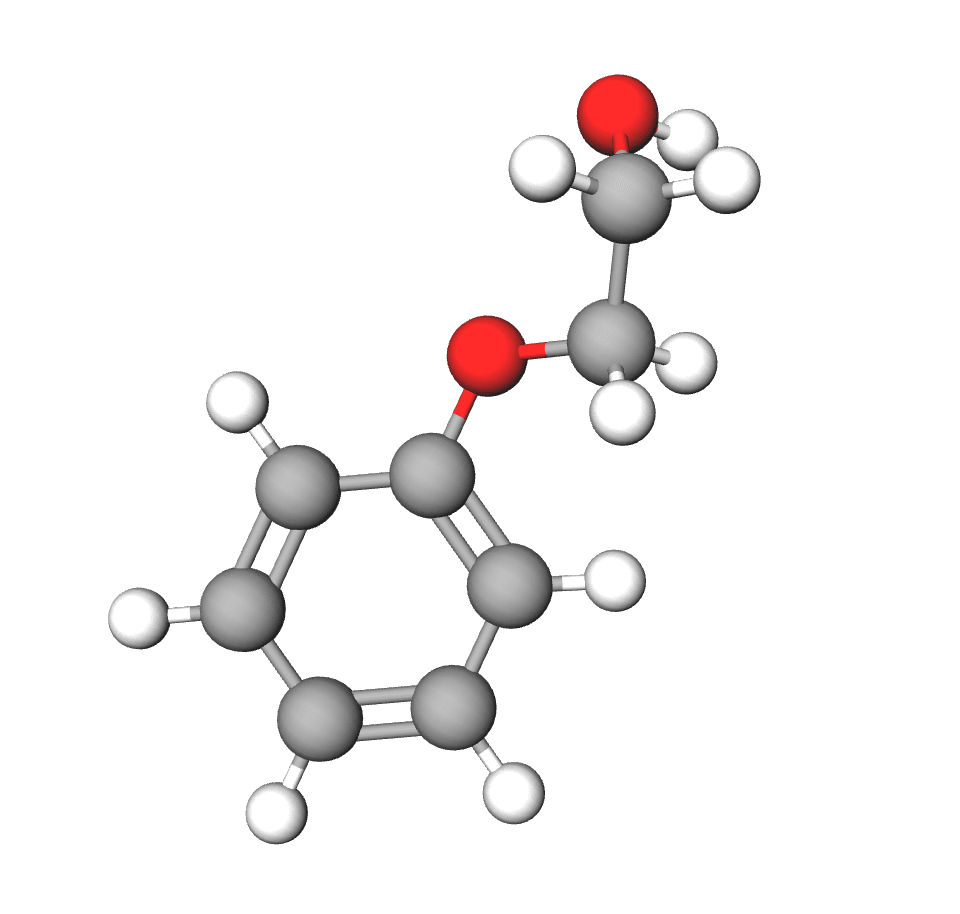
Phenoxyethanol is a common preservative used for skincare products that have been deemed a safe ingredient. The primary purpose of Phenoxyethanol is to keep bacteria out of our organic ingredients. It is remarkably effective against gram-negative bacteria and fungi. Without a good preservative, the bacteria that can grow on a skincare product are way more harmful than the chemicals themselves.
Thanks to its significant antimicrobial activity, Phenoxyethanol is a useful ingredient in formulas for treating dermatological conditions such as acne and mycoses. It can also be used as a plasticizer to improve product texture and as a fixative for fragrances.
Phenoxyethanol is so valuable and healthy that only a tiny amount is required to fight bacteria - that way, there are more potent, beneficial ingredients in the bottle - as opposed to preservatives. It is considered one of the less irritating ones to use in formulations.
Phenoxyethanol does not release formaldehyde. It is a weak biocide, most active against Gram-negative bacteria. It is mainly used in combination with other preservatives. It is stable up to 85 °C and useful from pH 3-10. It is a free-flowing liquid that can be added easily to most formulations. Phenoxyethanol is typically used at 0.1%.Safety
Preservatives are used to inhibit the growth of microorganisms, thereby keeping a product safe for use. Phenoxyethanol - a well-researched and well-tested product that is widely accepted in the industry today by a large number of manufacturers. Among cosmetics preservatives, Phenoxyethanol has one of the best toxicology profiles.
Phenoxyethanol is an effective preservative for cosmetics and pharmaceuticals and is recognized and approved worldwide. This includes international bodies such as the Cosmetic Toiletry and Fragrance Association, the U.S. government, the European Economic Community, and the Japanese Ministry of Health and Welfare. It is also listed as a preservative in the British Pharmacopoeia and the US Pharmacopoeia.
However, there are a lot of reported cases of sensitization and allergic reactions like urticaria and contact dermatitis, mostly in subclinical manifestations. Some researchers hypothesize that it can affect reproduction and fetal development, and suggest that additional studies are needed to complete the safety profile.
Dual-acting Antimicrobial action
It exhibits high efficiency and broad-spectrum effectiveness. Phenoxyethanol mounts a two-pronged attack. It associates with the bacterial cell wall, thereby disrupting cellular activity and preventing reproduction. It also causes irreversible leakage of materials through the cell wall, thereby depleting the cell of nutrients and killing it.
This two-pronged action makes Phenoxyethanol a highly efficient preservative - a double-edged sword that helps you win. The antimicrobial activity of Phenoxyethanol is broad-spectrum. It is effective against a wide range of microorganisms, including Gram-positive and Gram-negative bacteria, yeast, and molds. This makes Phenoxyethanol a highly effective preservative. In fact, studies have shown that Phenoxyethanol is far more potent against gram-negative bacteria than most other preservatives.
Compatibility
Phenoxyethanol is well compatible with most cosmetic ingredients. Several common ingredients enhance its activity. Potential enhancers include alcohols, antioxidants, and EDTA.
Toughness: Unlike many other preservatives, Phenoxyethanol is a very stable molecule. It has no labile or susceptible functional groups. Even under extreme conditions, it does not degrade, decompose, or give out noxious vapors.
Resistance to Adaptability
Microorganisms have diverse metabolic capabilities and can utilize virtually any organic compound as a substrate. So, they have the ability to adapt even to inhospitable environments over a period of time, such that they are able to grow even in adequately preserved cosmetics.
Experiments conducted in 1985 with multiple bacterial strains, including Pseudomonas aeruginosa, E. coli (gram-negative), and Staphylococcus aureus (gram-positive), demonstrated that these microorganisms adapted to all preservatives except Phenoxyethanol.
The inability of microorganisms to adapt to Phenoxyethanol makes it invaluably more effective than other preservatives. Its potency against microbial attack remains intact despite repeated challenges.
Long-lasting Efficiency
Because of its stability and the inability of microorganisms to adapt to it, Phenoxyethanol is always there to protect the product and consumer... the last to leave the battlefield...victorious.
Synergy in Preservation
The incorporation of parabens with Phenoxyethanol has been shown to be synergistic. Formulators can leverage this synergy when selecting preservative systems.
Ease of Incorporation
Phenoxyethanol, a colorless liquid, is readily incorporated into cosmetic formulations. Unlike other preservatives, it is soluble in both oil and water. It is uniformly dispersed throughout the cosmetic formulation. It can act as a solvent for other solid powder preservatives, such as parabens.
Usage Levels
In general, it has been found that about 0.6-0.8% Phenoxyethanol (or a synergistic combination of 0.3-0.4% Phenoxyethanol, 0.1% Methyl Paraben, and 0.01% Propyl Paraben) brings about adequate preservation in a cosmetic formulation.
However, because the amount of preservative required in a cosmetic or pharmaceutical formulation varies considerably with the ingredients, process, and application, we recommend that manufacturers determine the required preservative level accordingly.
F.A.Q.
What are the benefits of Phenoxyethanol?
Phenoxyethanol is a universal preservative with practically good effectiveness against the growth of microbes, including bacteria (gram-positive and negative), fungi, yeast, and even molds. Other benefits include:
- Suitable for a broad range of formulations from cleansing to eye care (compatible with surfactants, foundations, and other ingredients)
- Water solubility beyond the standard concentrations in the formula
- Stable performance in a wide range of pH values from 3 to 8.5
- Non-irritating in typical concentrations for skin, even for eyes and mucous membranes
- Hypoallergenic - practically no evidence of skin sensitization
- Low volatility in room temperatures and stability in higher degrees up to 176°F
- No loss of effectiveness in prolonged storage and increased shelf life.