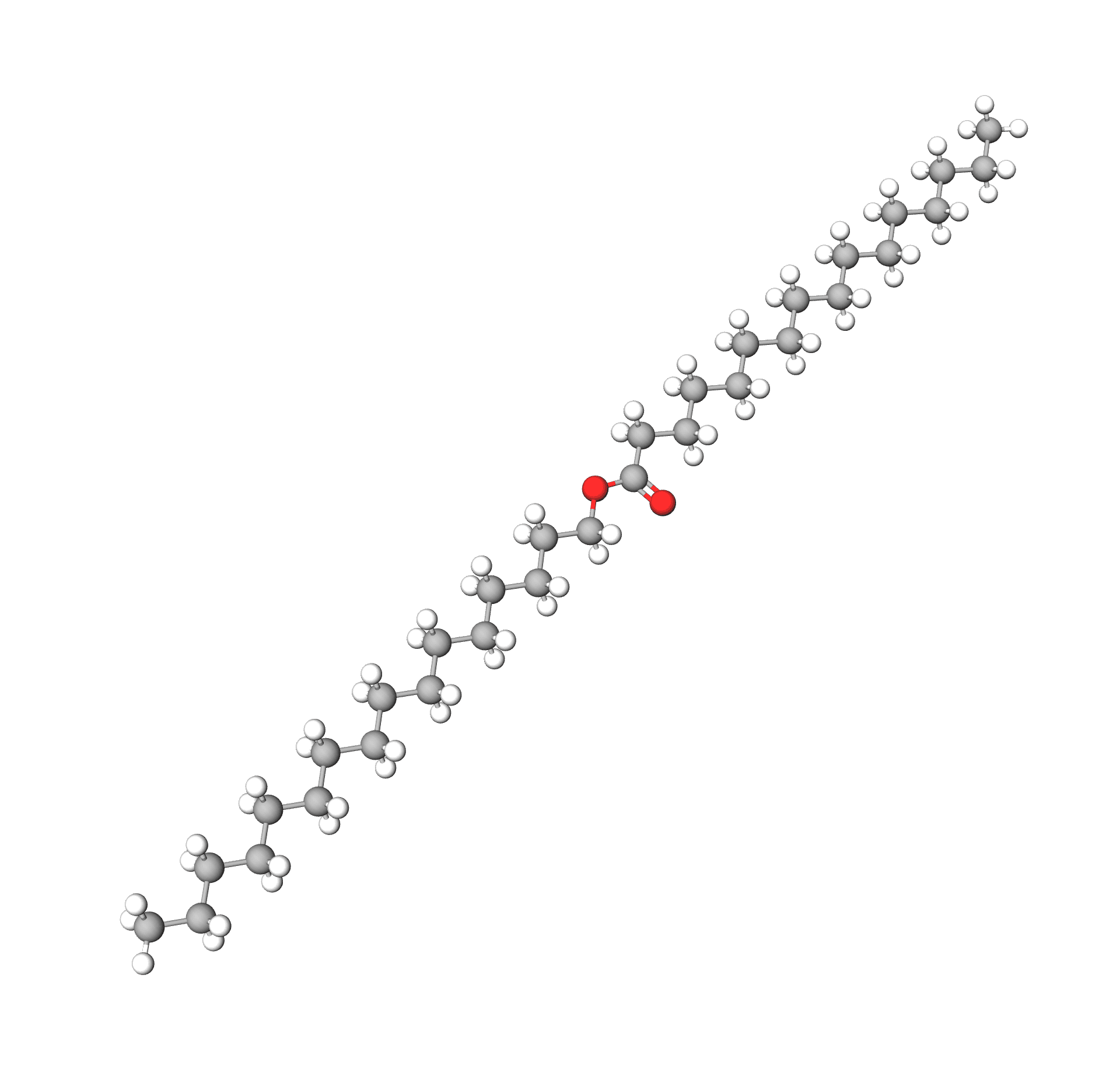
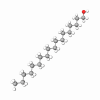
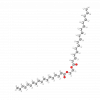
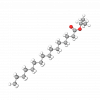
Cetyl Palmitate is a cetyl ester of palmitic acid that has similar properties to whale wax. It is a solid with a melting temperature range of 46-53ºC. Palmitic acid (hexadecanoic acid) constitutes between 20 and 30 percent of most animal fats and is an essential constituent of most vegetable fats (35 - 45 percent of palm oil).
Thanks to solvent-free production methods, many palmitate esters are used in a broad spectrum of cosmetics and personal care products. Cetyl Palmitate is an emollient that lubricates and conditions the skin's surface, helping it appear softer and smoother.
Cetyl Palmitate can be used as a surfactant in shampoos. It is also helpful as an emulsifier or thickening agent in cosmetic formulations, including lotions, moisturizers, and creams. It is also used to form solid-lipid nanoparticles (SLN) or nanostructured lipid carriers (NLC) as delivery vehicles for cosmetic actives.
Cetyl palmitate is an emollient or texturizing agent used in decorative cosmetics (foundations, lipsticks, eyeliner, concealers, etc.). Like palmitic acid, it absorbs infrared light from sunlight and is used as a protective ingredient in sunscreens, moisturizers, and anti-aging treatments. It is a safe, well-studied, and eco-friendly ingredient for personal care applications derived from renewable and sustainable sources.
Changed
References
Enzymatic kinetics of cetyl palmitate synthesis in a solvent-free system
Author(s):
Cirillo Natália Allana, Quirrenbach Carolina Gomes, Corazza Marcos Lúcio, Voll Fernando Augusto Pedersen
DOI:
10.1016/j.bej.2018.05.021
Cetyl palmitate-based NLC for topical delivery of Coenzyme Q(10) - development, physicochemical characterization and in vitro release studies
Preparation of cetyl palmitate-based PEGylated solid lipid nanoparticles by microfluidic technique
Author(s):
Arduino I, Liu Z, Rahikkala A, Figueiredo P, Correia A, Cutrignelli A, Denora N, Santos HA
PMID:
33326887
DOI:
10.1016/j.actbio.2020.12.024
Engineered lipid nanoparticles loaded with LL-37 peptide as inhalable drug delivery carriers for the treatment of bacterial infections
Author(s):
Reczyńska-Kolman K, Ochońska D, Brzychczy-Włoch M, Pamuła E
PMID:
40466415
DOI:
10.1016/j.bioadv.2025.214363
Safety Assessment of Alkyl Esters as Used in Cosmetics
Author(s):
Fiume Monice M., Heldreth Bart A., Bergfeld Wilma F., Belsito Donald V., Hill Ronald A., Klaassen Curtis D., Liebler Daniel C., Marks James G., Shank Ronald C., Slaga Thomas J., Snyder Paul W., Andersen F. Alan
Cetyl alcohol (also know as 1-Hexadecanol) is 16 carbons in length fatty alcohol produced from palm oil and is used as an emollient, emulsifier, thickener, and carrying agent.
Palmitic acid (Hexadecanoic acid) is a saturated, 16-carbon atom-length fatty acid, a common component of animal fats and vegetable oils. It is a white, waxy solid at room temperature.
Glycol Distearate is a diester of stearic acid with ethylene glycol, a waxy solid used as an emulsifier (HLB value of ~ 5.5), emulsion stabilizer, and opacifier.
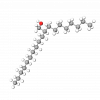
Octyldodecanol is a slightly yellow, clear, odorless fatty alcohol with low polarity, higher stability, and excellent wetting and solubilizing properties.
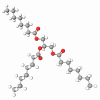
These triglycerides are designed explicitly for formulators interested in highly refined lightweight emollients with excellent after-feel solvents, fixatives, solubilizers, extenders, and carriers.
Caprylyl Glycol (1,2-Octanediol) is alcohol (diol contains two hydroxy groups on 1 and 2 positions) colorless liquid derived from raw natural materials, widely used in skin care applications for its humectant, antiseptic, anti-parasitic, antioxidant, and emollient properties.