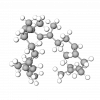

Hydrolyzed Elastin is an active ingredient obtained by enzymatic degradation of fiber protein elastin. Usually, the source of elastin is bovine. This multifunctional ingredient is a non-viscous, amber-colored, clear to slightly opalescent solution, which is clearly fluorescent under UV light.
Hydrolyzed elastin is mainly composed of the so-called β-elastin, the low molecular weight elastin peptide. Besides, it contains small quantities of elastin peptides of a higher molecular weight and some naturally occurring collagen hydrolysates.
The activity of elastin hydrolysates (α-, β-, and κ-elastin) after local external application has not yet been fully clarified. Resorption by the skin, incorporation into the skin's elastin matrix, and consequent improvement in the skin's elasticity have been described and discussed.
Studies showed that elastin fragments activate skin fibroblasts and stimulate the production of extracellular matrix components, including collagen and elastin. Also, it's a perfect source of building blocks for producing those essential proteins.However, Hydrolyzed elastin may be regarded as a protective protein with affinity to skin and hair. It is used as an additive in skincare cosmetics, such as nourishing creams and body lotions, and is also very suitable for hair treatment products.
About Elastin
After collagen, elastin is the second most abundant structural protein in the animal body. It is found in most connective tissues combined with other compounds – proteins, proteoglycans, and glycosaminoglycans (GAGs). It is essential for the elasticity of the connective tissues, allowing them to extend and then recover.
In combination with collagen, elastin confers the unique balance of flexibility and tensile strength in connective tissues. It is found where resilience is most important – e.g., in the tendons, ligaments, vascular walls, the aorta, and the skin. It is intertwined amongst “bundles” of collagen fibers in the skin, forming a fibrillar sub-epidermal network. It has been noted that structures that require greater tensile strength contain more collagen and proportionally less elastin. It is well known that the elastin content of tissues is adversely affected by the aging process.
Elastin is produced by the mesodermal cells (fibroblasts), analogously to collagen. Native elastin has a high molecular weight and is insoluble in water; it is resistant to enzyme attacks. To incorporate it into cosmetic formulations, careful hydrolysis to lower-molecular-weight fractions is required. On hydrolysis of selected elastin-rich feedstock and purification of the extract, a cosmetic-grade protein may be obtained, as with hydrolyzed elastin.