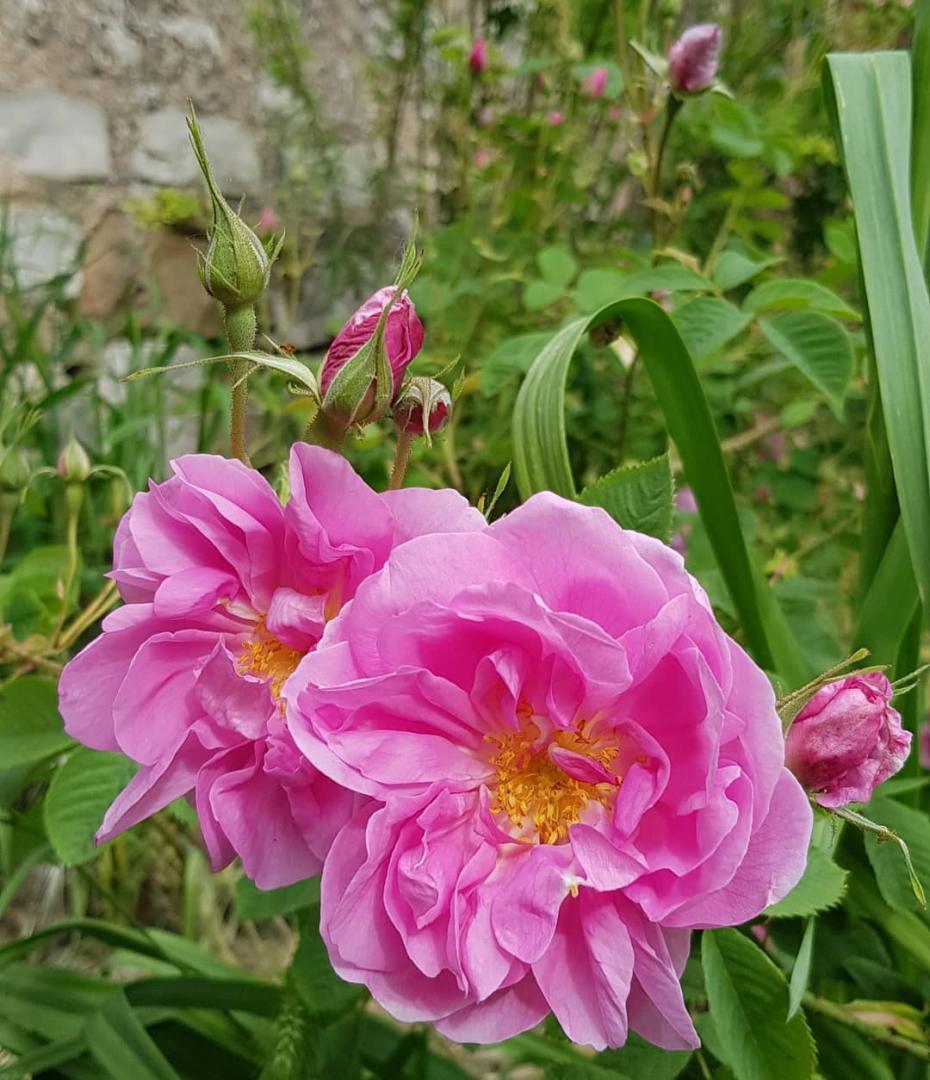
Damask Rose Oil is a pale, yellow, and semisolid liquid obtained by distilling fresh flowers. It's very expensive, as only one part of the oil may be produced from 3000 parts of the flower yield. Damask rose, also known as Rosa damascena, is one of the most important flowers in the Rosaceae family. Rose water contains 10% to 50% oil, so most formulations use water as a relatively cheaper ingredient.
Rosa Damascena Flower Oil contains several groups of biologically active compounds, such as terpenes, glycosides, flavonoids, and anthocyanins. Here is a brief list of the most essential substances: myrcene, Vitamin C, Kaempferol, and Quercetin. Damask rose has been used in food, medicine, and cosmetics for centuries, so its pharmacological profile is well-studied.
This adorable oil has antimicrobial, antioxidant, anti-inflammatory, and anti-aging effects. Rosa damascena exhibits a broad spectrum of antimicrobial activity against various harmful bacterial species. Like many other aromatic and medicinal flowers, it shows antioxidant, antidepressant, and aphrodisiac properties. Rich in natural polyphenolic compounds and L-ascorbic acid (Vitamin C), the Damask rose eliminates free radicals, protecting skin cell membranes from oxidation.
Novel studies showed that Rosa Damascena Flower Oil exhibits tyrosinase-inhibiting activity, reversibly decreases melanin production, and can be used as a skin whitening agent. Another study showed that it can exhibit genotoxic and cytotoxic effects at high concentrations, but is safe at cosmetic concentrations.
Rosa × damascena Herrm. essential oil: anti-tyrosinase activity and phytochemical composition
Author(s):
Wu Q, Fang W, Liu H, Liu Z, Xu X
PMID:
39323629
DOI:
10.3389/fphar.2024.1451452
Evaluation of anti-oxidant and antimelanogenic effects of the essential oil and extracts of Rosa × damascena in B16F10 murine melanoma cell line
Author(s):
Hadipour E, Rezazadeh Kafash M, Emami SA, Asili J, Boghrati Z, Tayarani-Najaran Z
PMID:
37605721
DOI:
10.22038/IJBMS.2023.69734.15182
Rosa damascena oil improves SSRI-induced sexual dysfunction in male patients suffering from major depressive disorders: results from a double-blind, randomized, and placebo-controlled clinical trial
Author(s):
Farnia V, Shirzadifar M, Shakeri J, Rezaei M, Bajoghli H, Holsboer-Trachsler E, Brand S
PMID:
25834441
DOI:
10.2147/NDT.S78696
Rosa damascena Mill. Essential Oil: Analysis of In Vitro and In Vivo Genotoxic and Cytotoxic Potentials by Employing Three Cytogenetic Endpoints
Author(s):
Gerasimova T, Gateva S, Jovtchev G, Angelova T, Topashka-Ancheva M, Dobreva A, Mileva M
PMID:
39795135
DOI:
10.3390/molecules30010078
Determination of Major, Minor and Chiral Components as Quality and Authenticity Markers of Rosa damascena Oil by GC-FID
Author(s):
Raeber J, Favrod S, Steuer C
PMID:
36771592
DOI:
10.3390/plants12030506
Rose oil (from Rosa × damascena Mill.) vapor attenuates depression-induced oxidative toxicity in rat brain
Author(s):
Nazıroğlu M, Kozlu S, Yorgancıgil E, Uğuz AC, Karakuş K
PMID:
22484603
DOI:
10.1007/s11418-012-0666-7
Antibacterial activity of Rosa damascena essential oil
Author(s):
Basim E, Basim H
PMID:
12781814
DOI:
10.1016/s0367-326x(03)00044-3
Chemical Composition, Antifungal Activity, and Plant-Protective Potential of Rosa damascena Mill. Essential Oil Against Fusarium graminearum
Author(s):
Özsoy E, Barak TH, Yörük E, Servi H, Yli-Mattila T
PMID:
40333158
DOI:
10.3390/pathogens14040383
Anti-Herpes Simplex Virus Type 1 Activity of Rosa damascena Mill Essential Oil and Floral Water in Retinal Infection In Vitro and In Silico
Author(s):
Vilhelmova-Ilieva N, Nenova R, Kalinov K, Dobreva A, Peshev D, Iliev I
PMID:
40806646
DOI:
10.3390/ijms26157521
Anti-inflammatory Effects of Deuterium-Depleted Water Plus Rosa Damascena Mill. Essential Oil Via Cyclooxygenase-2 Pathway in Rats
Author(s):
Fatemi F, Golbodagh A, Hojihosseini R, Dadkhah A, Akbarzadeh K, Dini S, Malayeri MRM
Rosa centifolia has great therapeutic benefits including antioxidant, antimicrobial, and aromatherapeutic properties. It was noted that concentrate has physiological and psychological relaxation, analgesic, and anti-anxiety effects.
Myrrh Resin Extract is an oil obtained by extracting Commiphora Abyssinica (Commiphora Myrrha) tree resin valued for antiseptic, anti-inflammatory, and astringent properties.
Nutmeg oil comes from the fruit of an evergreen tree, Myristica Fragrans, that grows up to 65ft (20m) high with a grayish-brown smooth bark, dense foliage, and small dull-yellow flowers.
Sesame oil is a versatile, pale oil that is extracted from the seed. It has a rich content of Vitamin E, A, and calcium, making it particularly beneficial for dry skin and various skin conditions.
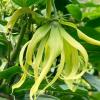
Ylang-ylang oil is sweet, exotic, sensual floral. Ylang-ylang (Cananga Odorata) is a tall tropical tree up to 65ft (20m) high with large, tender, fragrant flowers, which can be pink, mauve, or yellow.
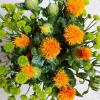
Safflower (Carthamus tinctorius) oil is a light, naturally stable, liquid oil with a superb emollient property that quickly penetrates the skin barrier.