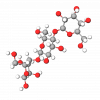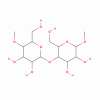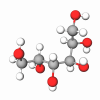
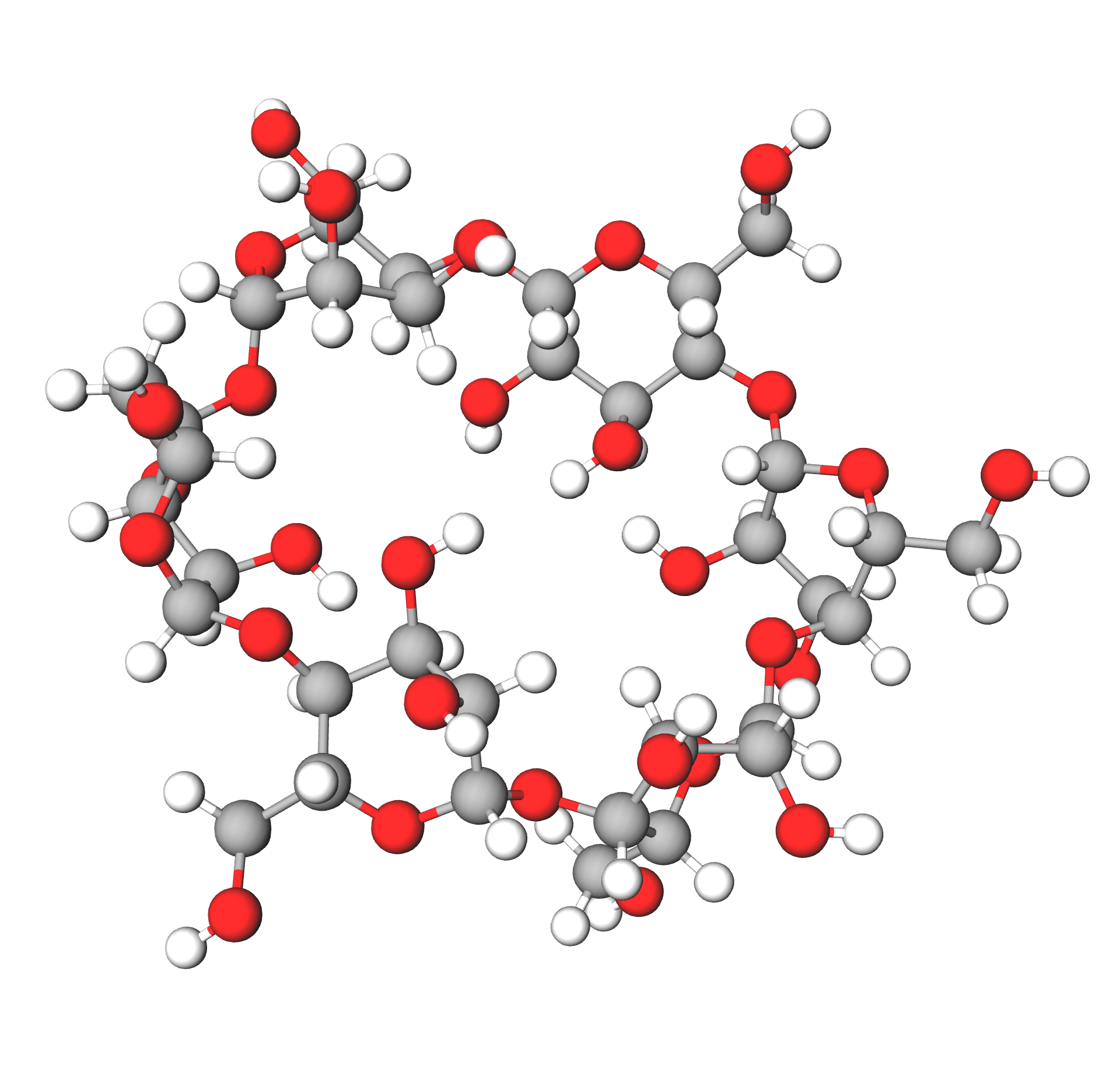
Cyclodextrin is a general term for cyclic oligosaccharides (glucopyranoses) biotechnologically derived from starch by enzymatic degradation with a CGT (Cyclodextrin Glucose Transferase enzyme). The primary common forms are named α-, β-, and γ-cyclodextrin, which contain respectively six, seven, and eight glucose subunits.
Cyclodextrins are considered a versatile, natural, and biodegradable cosmetic ingredient derived from botanical raw materials. Thanks to their toroidal molecular shape, they form a lipophilic cavity that can envelope (carry) acives with compatible polarity and size. When cross-linked with polymers, they hold more active compounds, forming structures called "cyclodextrin nano-sponges." Those delivery systems provide controlled-release of actives with enhanced bioavailability and functional activity.
Like dextrins and other oligosaccharides, cyclodextrins contain multiple OH groups in their molecular structure. These groups attract water molecules and exhibit excellent hydrating and skin conditioning properties. In addition, Cyclodextrin is a multifunctional ingredient for personal care applications that can act as an absorbent, chelating agent, and emollient, depending on the formulation type.
Moreover, Cyclodextrin acts as a stabilizer for active ingredients in formulations, protecting them from oxidation and thermal degradation. It improves formulation texture and uniformity, acts as a solubilizer, and enhances the penetration of larger-molecule actives. Furthermore, its encapsulation ability enables masking of unpleasant odors or specific ingredients.Cyclodextrins are safe, naturally derived, and eco-friendly ingredients that are not irritating to the skin or eyes. They possess high performance, low toxicity, and low immunogenicity.