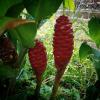
Bitter ginger (Wild ginger or Zingiber Zerumbet) is a tropical plant from the ginger family that grows up to 3.9 ft tall. Its extract is a natural anti-aging ingredient for body care applications, especially for legs.
Black oat extract
Related ingredients
Cucumber (Cucumis Sativus) extract comes from the cucumber plant, and it has skin conditioning properties. This extract is a superfood for the skin.
Nymphaea Caerulea Flower Extract is derived from the Blue Lotus, a universal symbol of beauty. The Blue Lotus, or the sacred blue lily of the Nile, is known in many parts of the world as a symbol of tranquility and beauty.
The first clinical investigations on the medical application of various Centella Asiatica extracts were completed during the early 1940s (Anonymous 1945a,b). Boiteau and Ratsimamanga (1956) have investigated the action of asiaticoside on the cicatrization of experimentally induced wounds.
Red clover extract has an antioxidant and anti-inflammatory effect. In addition, it improves hair density and protects cells against early aging.
Opuntia Ficus-Indica Stem Extract is a natural ingredient obtained by applying bespoke enzymatic treatment able to reduce the molecular dimension of the Indian fig polysaccharide to enhance the effectiveness of these macr
French lavender (Lavandula angustifolia) is credited with many rich qualities. When used externally, its preparations had antiseptic and disinfectant properties.
The pressed extract of this Peach (Prunus Persica) seed was used as a hair growth product for balding spots and, in some parts of the world, was combined with raw apple cider before application.
The ricegrass, Oryzopisis miliciea – a common white rice, is grown in southern India. The grasses are planted in the early spring and harvested every three weeks throughout the summer. Freshly harvested plants are extracted in water and purified.
The Banana (Musa Sapientum) plant looks like a tree, but it is actually a very large barkless plant.
Thyme (Thymus Vulgaris) was used by the ancient Egyptians as an embalming agent, by the Romans as a skin freshener, and by the Greeks as incense at their altars.
The root of the Elecampane plant is the part used for Herbal Medicine. It has many medicinal actions, uses, and properties such as: anti-fungal, antibacterial, antitussive, anti-parasitic, and antiseptic.